🍫 Chocolate Hazelnut Dunking Biscuits
🥗 Diet
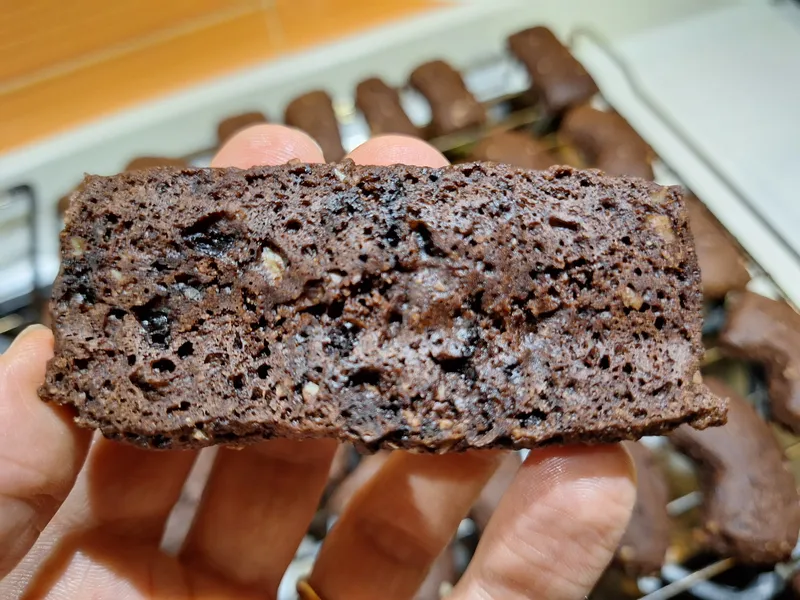
Dry, porous bitter cocoa biscuits with toasted hazelnuts, engineered to absorb milk or coffee. Double-baked for the perfect sponge structure.
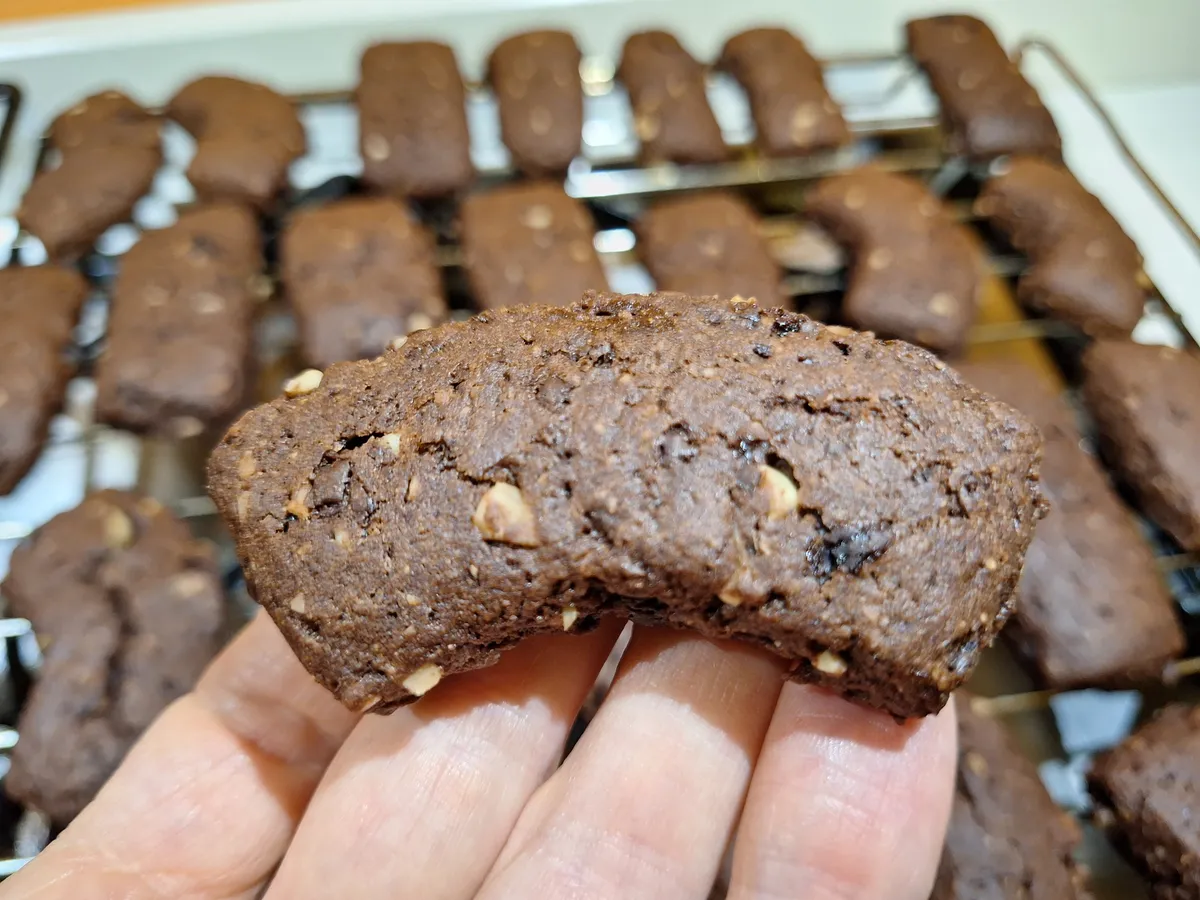
Chocolate Hazelnut Dunking Biscuits
Set the amount of ingredients you want to use with one of the two options below:
Quantity
Semi-wholemeal flour (type 2) (min g, max g):
g
1. Ingredients
Makes about 40 biscuits. An egg-free version of this recipe is also available, with adjusted ingredients and proportions.
| Ingredient | Quantity |
|---|---|
| Semi-wholemeal flour (type 2) | 350 g |
| Plain flour (type 0) | 100 g |
| Unsweetened cocoa powder | 50 g |
| Brown sugar | 144 g |
| Whole eggs | 100 g (2 medium eggs) |
| Mild extra-virgin olive oil | 80 ml |
| Whole milk | 110 ml |
| Baker's ammonia (ammonium bicarbonate) | 18 g |
| Cornstarch | 24 g |
| Instant coffee | 4 g |
| Toasted hazelnuts | 80 g |
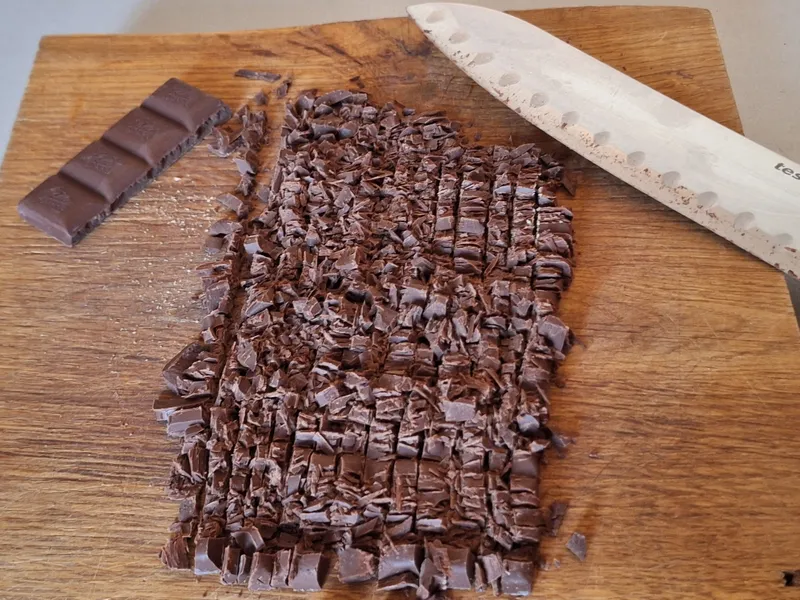
| Dark chocolate chips (60-70%) | 80 g |
| Wildflower honey | 16 g |
| Grated orange zest | 4 g (about 1 orange) |
| Cinnamon | 4 g |
| Salt | 2.5 g |
2. Method
- Nut preparation
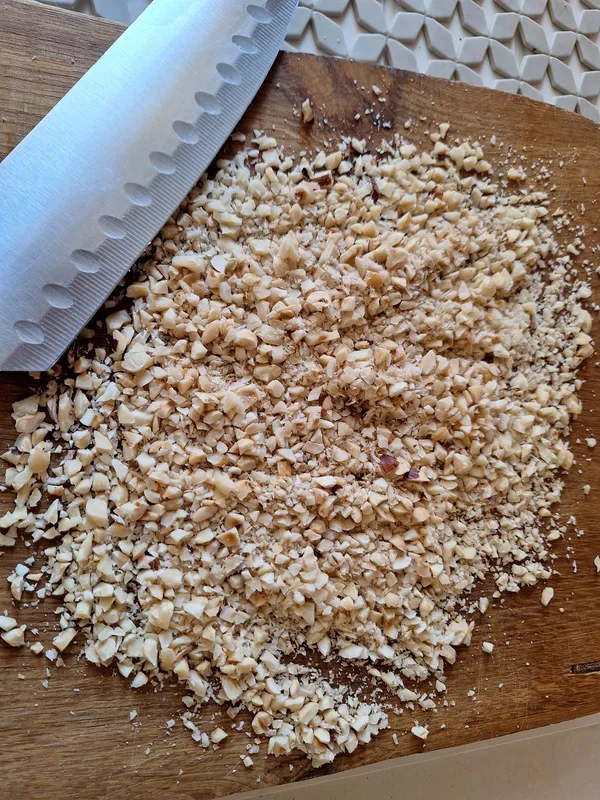
- Chop 80 g toasted hazelnuts with a knife or pulse in a food processor: pieces of 2–3 mm, coarse granules. Do not reduce to flour (becomes oily) and do not leave whole (creates weak points when dunking).
- Dry mix
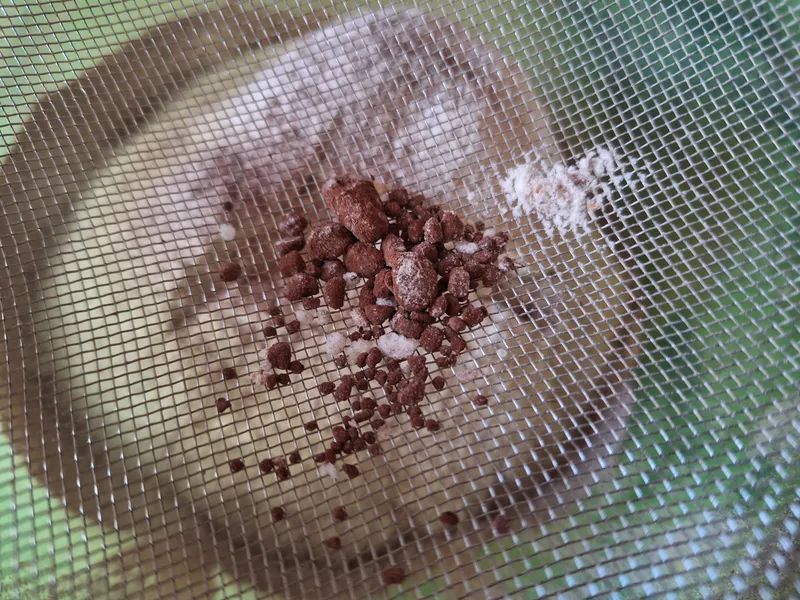
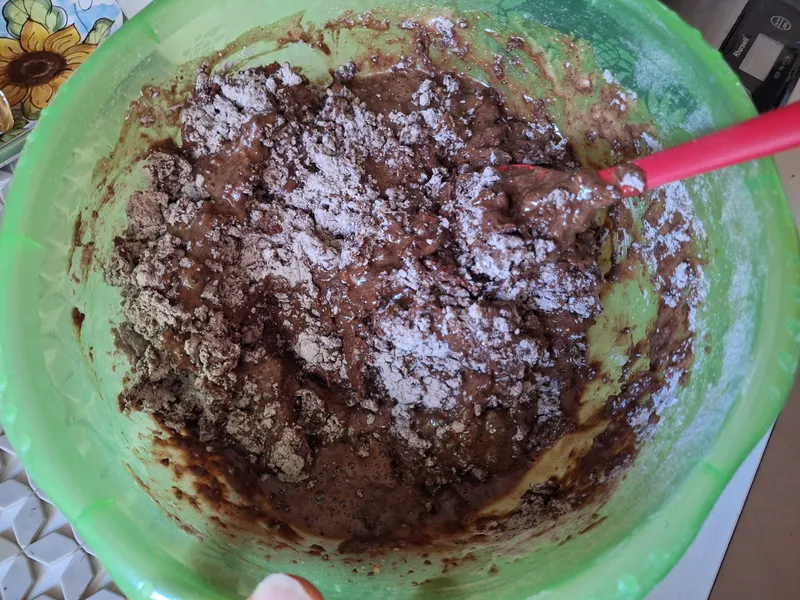
- In a large bowl sift together 350 g semi-wholemeal flour (type 2), 100 g plain flour (type 0), 50 g unsweetened cocoa powder, 24 g cornstarch, 18 g baker's ammonia, 4 g instant coffee, 4 g cinnamon, 2.5 g salt. Sifting matters more here than in the spiced version: cocoa tends to clump. Add the chopped hazelnuts and stir.
- Wet mix
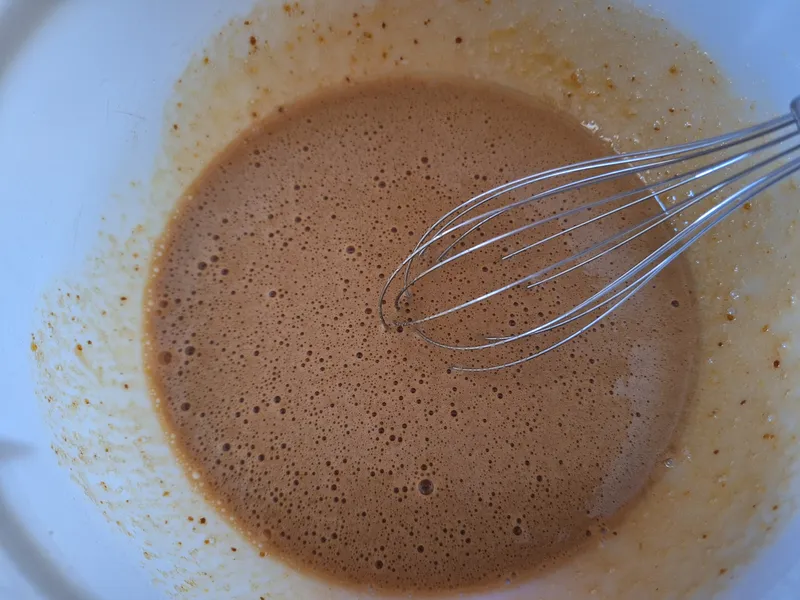
- In another bowl whisk 100 g whole eggs with 144 g brown sugar for 1 minute. Add 80 ml mild extra-virgin olive oil, 110 ml whole milk, 16 g wildflower honey and 4 g grated orange zest. Mix well.
- Dough and rest
- Pour the wet into the dry. Knead by hand or with a dough hook (low speed, 3–4 minutes) until smooth and firm. Fold in 80 g dark chocolate chips at the end with a few hand folds. Wrap in cling film and refrigerate for 45 minutes (15 minutes more than the spiced version: cocoa needs extra time to hydrate).
- Shaping and baking
- Turn on the static oven and bring it to 170 °C (5 °C lower than the spiced version: cocoa and brown sugar burn more easily).
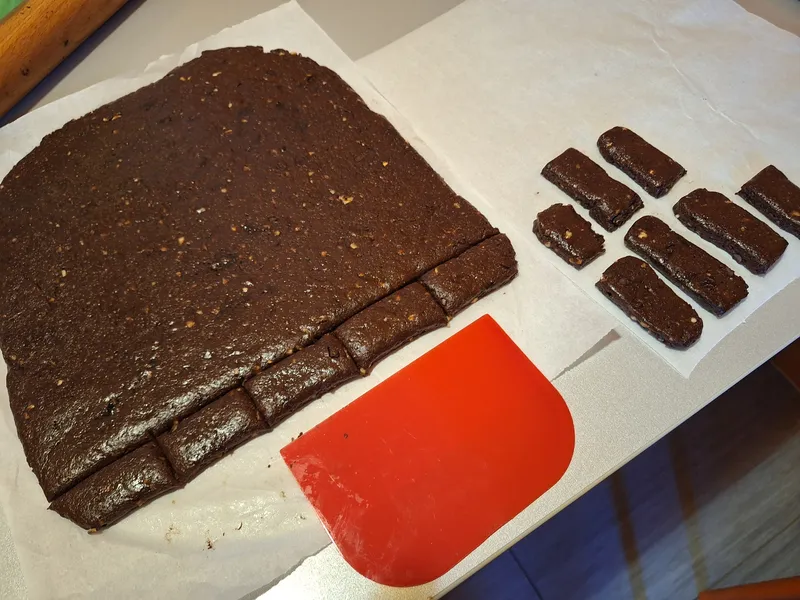
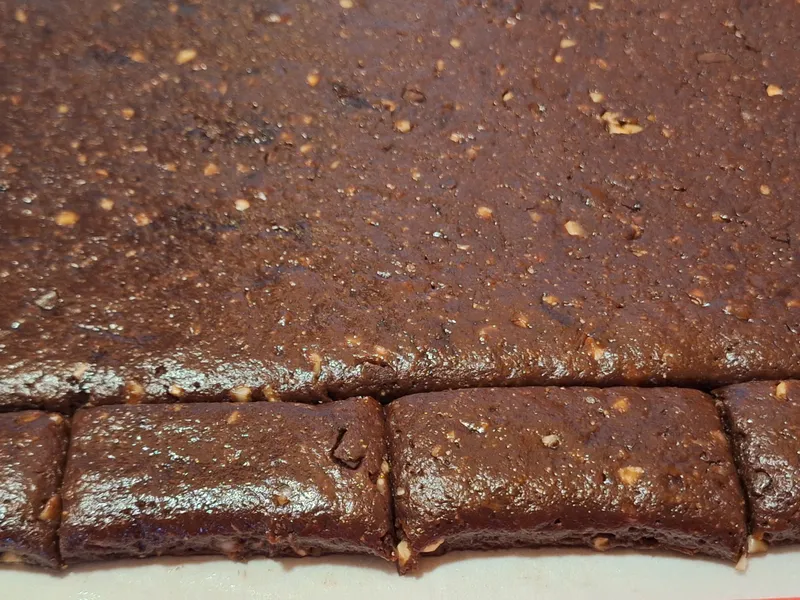
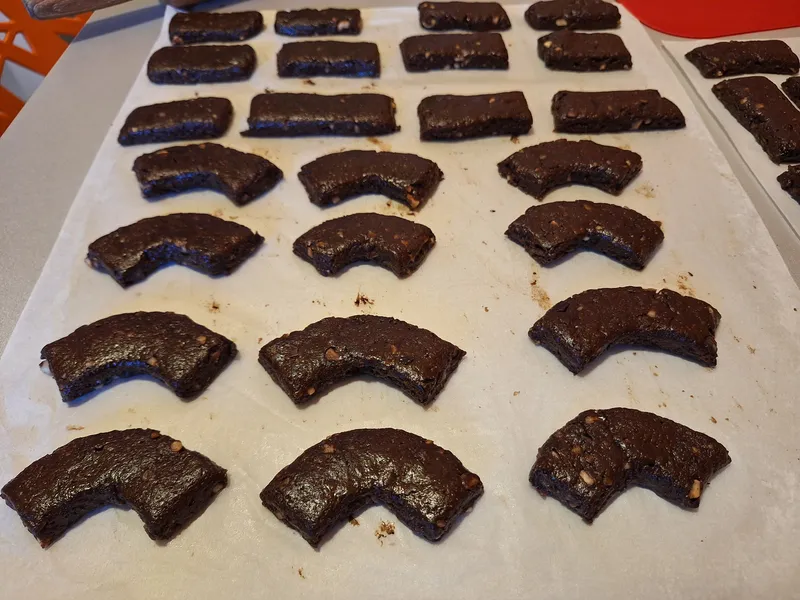
- Pinch off pieces of dough and roll into sticks about 1.5 cm thick and 8 cm long. Place on a lined baking sheet, spaced 3–4 cm apart.
- Bake 16–18 minutes.
- Remove the tray, lower the oven to 145 °C and wait 3–5 minutes for the temperature to drop. Return the tray and bake another 10–12 minutes.
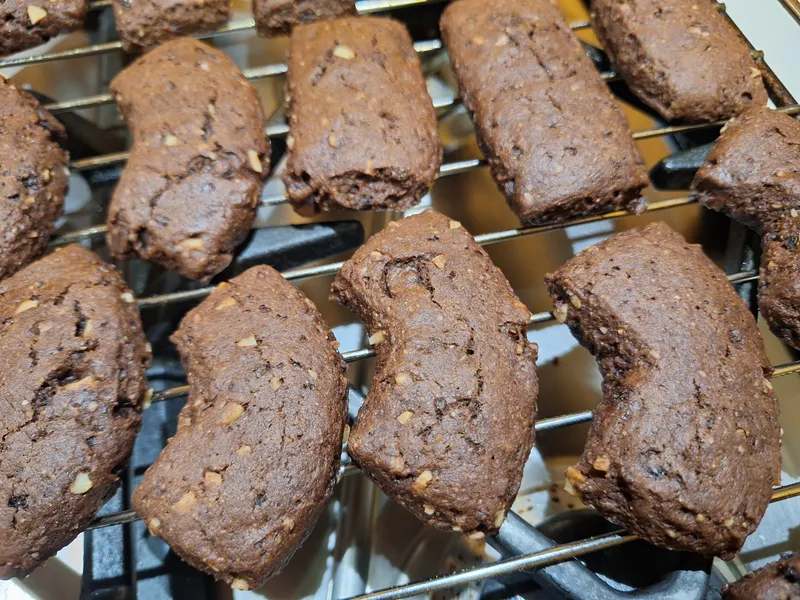
- Turn off the oven, leave the door ajar, let the biscuits sit inside for 10 minutes. Transfer to a wire rack to cool completely.
3. Storage
Let cool completely before storing.
- Room temperature: in a sealed tin or glass jar, away from heat and humidity. They keep for 3 weeks. The chocolate flavour deepens after 2–3 days of resting.
- Refrigerator: not necessary or recommended. Fridge humidity can soften them, causing them to lose the crispness needed for dunking.
- Freezer: possible for up to 2 months, in an airtight container. Thaw at room temperature while still covered.
4. Why these amounts? An ingredient-by-ingredient explanation
Unsweetened cocoa powder: why 50 g (10%) and which one to choose
- 50 g out of 500 g of base (10%) is the sweet spot: intense, unmistakable chocolate flavour and a deep, dark colour without the biscuit turning bitter or powdery.
- At 30 g (6%): "vaguely chocolatey" flavour; disappointing. The colour turns greyish-brown rather than true chocolate.
- At 70 g (14%): too bitter even with extra sugar; sandy, powdery texture; the cocoa absorbs too much liquid and the dough becomes unworkable.
- Type of cocoa: use natural (non-alkalized) unsweetened cocoa powder for the best result with baker's ammonia. Dutch-process cocoa (darker, less acidic) also works but slightly reduces the leavening action of the ammonia.
- Recommended brands: Perugina (easy to find, good value), Icam (finer, more complex flavour), Van Houten (classic Dutch cocoa, excellent for biscuits). Avoid "pudding cocoa" or "drinking chocolate mixes" (they contain sugar and flavourings).
- Effect on liquid absorption: cocoa absorbs ~100% of its weight in liquid (vs. ~60% for flour). That is why the milk increases from 80 ml to 110 ml. Without this increase, the dough would be dry and crumbly.
Instant coffee: why it amplifies chocolate
- 4 g of instant coffee does not give the biscuit a coffee flavour. At this quantity it acts as a flavour amplifier for the cocoa.
- The mechanism: coffee contains aromatic compounds (pyrazines, furans) that the brain associates with "intense chocolate". The result is a biscuit that tastes "more chocolatey" than cocoa alone can deliver.
- This trick is used by professional pastry chefs in all chocolate baked goods. The quantity stays deliberately below the point at which coffee becomes perceptible on its own (roughly, above ~8–10 g per 500 g of flour).
- No instant coffee? Use 4 g of very strong, cooled espresso (roughly one teaspoon of liquid), or simply leave it out; the biscuit will be good rather than exceptional.
Dark chocolate chips: why optional but recommended
- Cocoa powder gives the biscuit its chocolate flavour but it is dry and bitter on its own. The chocolate chips add pockets of melted dark chocolate inside; when you dunk in warm milk, those pockets soften and create an incredible contrast of textures.
- 80 g (16%): enough to notice them clearly without turning the biscuit into an American-style cookie. They are evenly distributed rather than dominant.
- Use 60–70% dark chocolate: below 60% it is too sweet and melts too much during baking; above 70% it is too bitter and stays too firm.
- For dunking: the chips do not compromise porosity. They become encapsulated in the dough during baking and leave the surrounding absorption channels intact.
- If you leave them out: the biscuit works perfectly; it is simply less indulgent. It becomes a more austere "cocoa biscuit".
Orange zest: why orange and not lemon
- In the spiced version, lemon "wakes up" the palate and contrasts the warm spices. Here the role is different: orange pairs naturally with chocolate (a classic Italian and French combination).
- Lemon with chocolate creates a jarring, almost metallic contrast. Orange creates harmony.
- 4 g (one grated orange): enough to add a subtle citrus background note. The biscuit should not taste of "chocolate orange"; the zest is there for depth.
- Alternative: if you prefer, leave the orange out altogether. The biscuit works well without it too.
Cinnamon: why so little (4 g)
- In this recipe cinnamon is not the star (that role belongs to the spiced version). Here it serves as a warm background note that rounds out the cocoa and softens the way it is perceived.
- 4 g (0.8%): you notice it only subconsciously. The brain reads "rich chocolate" rather than "cinnamon biscuit".
- At 6+ g it becomes a "cocoa-cinnamon biscuit" (Mexican-style, like champurrado), which is excellent but a different biscuit altogether.
- For a more "Aztec" profile: increase to 6 g of cinnamon and add a pinch of cayenne pepper (0.5 g). That is a specific variant, not the base recipe.
Salt: why 2.5 g and not 1.5 g as in the spiced version
- Salt is chocolate's best friend. At 2.5 g (0.5% of the base) you do not taste "salty"; instead, the cocoa becomes more intense, less flat and less powdery.
- At 1.5 g (as in the spiced version): the chocolate flavour feels slightly dull.
- At 4 g: the biscuit has a perceptible salty note (like dark chocolate with sea salt). Some people love it, but it is a gourmet variant rather than the base recipe.
- This principle applies throughout chocolate patisserie: salt suppresses bitterness and amplifies the aromatic notes of cocoa.
Oil: why it stays at 80 ml
- Identical to the spiced version: 80 ml (14.4%) is the balance point for dunking porosity.
- Cocoa contains ~10–15% natural fat (residual cocoa butter), so the total fat in the biscuit is slightly higher than in the spiced version. But not enough to close the pores; the difference is negligible for absorption purposes.
Whole milk: why 110 ml and why cow's milk
- +30 ml compared to the spiced version, to compensate for cocoa absorption.
- Cocoa powder absorbs liquid far more than flour does (~100% of its weight vs. ~60%). 50 g of cocoa "steals" around 50 ml of liquid from the dough.
- Without this increase: the dough is too dry, crumbles during shaping and the baked biscuits are too dense and absorb poorly when dunked.
- At 130 ml: the dough becomes too soft, the biscuits spread in the oven and lose their shape.
- Why whole cow's milk and not plant-based: caseins (cow's milk proteins) contribute to the protein network of the dough, improving its hold when dunked (observationally, holding for roughly 5–6 seconds without crumbling versus about 4–5 with plant milk). Lactose takes part in the Maillard reaction, developing toasted aromas that complement the cocoa. The fat content of whole milk (~3.5%) is negligible for porosity purposes but contributes to the perceived softness.
Hazelnuts: why they are perfect with chocolate
- Chocolate and hazelnut = gianduja, the most celebrated flavour pairing in Italian confectionery (Nutella, gianduiotti, cremino).
- Toasted hazelnuts develop Maillard compounds that echo those in roasted cocoa. Each one amplifies the other.
- Same rules as the spiced version: 2–3 mm pieces, not powdered, not whole.
- Alternatives: toasted almonds (less synergy with cocoa but they work) or pecans (more buttery, with a caramel note that pairs well with dark chocolate).
Sugar: why 144 g and not 130 g
- +15 g compared to the spiced version, to balance the bitterness of the cocoa.
- Unsweetened cocoa without sugar is unpleasant. At 130 g the biscuit has a bitter edge that is too pronounced for most palates.
- At 144 g (29%) the biscuit reads as "sweet dark chocolate": the bitterness of the cocoa is present but rounded. Not cloying.
- Despite the increase, it remains below the traditional average for chocolate biscuits (which use 160–200 g per 500 g of flour).
- In the original spiced version, the spices "tricked" the palate into perceiving sweetness. Here cocoa does the opposite (it adds bitterness), so a little more real sugar is needed.
5. Reducing the Sugar
How much I reduced it and why
Traditional chocolate biscuit recipes use 160–200 g of sugar per 500 g of flour (32–40%).
This recipe: 144 g (29%) = a reduction of roughly 20–25% compared to the traditional average.
The compensators that offset the perception of "not sweet enough":
- Wildflower honey (16 g): adds perceived sweetness greater than sugar gram for gram (fructose is commonly cited as roughly 1.2–1.8× sweeter than sucrose, often quoted as ~1.7×).
- Cinnamon: signals sweetness to the brain (minimal here, but it contributes).
- Dark chocolate chips: concentrated pockets of sweetness that "burst" in the mouth.
- Salt: suppresses the residual bitterness of the cocoa, making the biscuit taste sweeter than it actually is.
- Toasted hazelnuts: the natural sugars caramelised during toasting add their own sweetness.
Why not less than 144 g with cocoa?
Below 120 g (24%) with 50 g of cocoa, the biscuit becomes:
- Too bitter (the cocoa has no adequate counterbalance).
- Harder (less tenderness; the gluten develops too much).
- "Flat" and "powdery" flavour.
- 144 g is the point at which the chocolate expresses itself best: intense, neither too bitter nor too sweet.
6. Dunking pairings
| Drink | Pairing | Rating |
|---|---|---|
| Hot whole milk | Classic. The fat in the milk melts the chocolate chips; the biscuit turns creamy | ⭐⭐⭐⭐⭐ |
| Hot plant milk (oat, almond) | A good alternative. Oat milk has its own natural sweetness that complements cocoa | ⭐⭐⭐⭐ |
| Coffee (Americano or lungo) | Natural mocha. Coffee amplifies cocoa (same principle as in the dough) | ⭐⭐⭐⭐⭐ |
| Cappuccino | Foam and dark chocolate: magic | ⭐⭐⭐⭐ |
| Peppermint herbal tea | After Eight as a biscuit. Fresh and chocolate | ⭐⭐⭐⭐ |
| Ginger herbal tea | Warmth and chocolate; a good contrast | ⭐⭐⭐ |
| Black tea (English Breakfast) | Works, but less synergy than the spiced version with tea | ⭐⭐⭐ |
7. Key differences vs. the Spiced Version
| Aspect | Spiced Version | Chocolate Version | Why |
|---|---|---|---|
| Main flavouring | Pumpkin spice 12 g | Unsweetened cocoa 50 g | Cocoa acts as both a flavouring and a flour (it takes up volume) |
| Semi-wholemeal flour | 400 g (80%) | 350 g (70%) | Cocoa takes up the 10% difference |
| Sugar | 130 g (26%) | 144 g (29%) | Balances cocoa bitterness |
| Whole milk | 80 ml | 110 ml | Cocoa absorbs more liquid |
| Salt | 1.5 g | 2.5 g | Enhances chocolate |
| Citrus | Lemon | Orange | Orange and chocolate pair better than lemon and chocolate |
| Supporting spice | Pumpkin spice mix (star) | Cinnamon 4 g (background) | Must not compete with cocoa |
| Amplifier | None | Instant coffee 4 g | Amplifies perceived chocolate |
| Extra inclusions | None | Dark chocolate chips 80 g | Pockets of melted chocolate during dunking |
| First bake temp. | 175°C | 170°C | Cocoa and brown sugar burn more easily |
| Second bake temp. | 150°C | 145°C | Same logic |
| Fridge rest | 30 min | 45 min | Cocoa needs more time to hydrate |
8. The "Aztec" Variant (for the adventurous)
For a spicier, more pungent profile in the style of Mexican hot chocolate:
- Cinnamon: increase from 4 g to 6 g
- Add: cayenne pepper 0.5–1 g (a pinch; it should create warmth in the throat, not burn)
- Add: a pinch of nutmeg (0.5 g)
- Omit the orange zest
- The result is a "chocolate and slow fire" biscuit that shines best when dunked in hot milk (the fat in the milk tames the heat and distributes the aromas).
9. FAQ Summary Table
| Question | Answer |
|---|---|
| Cocoa? | Unsweetened, non-alkalized preferred. 50 g per 500 g base (10%) |
| Flour? | Semi-wholemeal (type 2) 70% + plain flour (type 0) 20% + cocoa 10% |
| Milk? | Whole cow's milk (better structure for dunking) |
| Eggs? | YES in the main recipe; egg-free = a different recipe |
| Oil? | Mild extra-virgin olive oil 80 ml (same as spiced version) |
| Are the chips compulsory? | No, optional. Without them = pure cocoa biscuit; with them = more indulgent |
| Can I use melted chocolate instead of cocoa powder? | No. Melted chocolate adds fats (cocoa butter) that seal the pores. Cocoa powder gives flavour without compromising dunking porosity |
| Lower temperature; why? | Cocoa and brown sugar are more prone to scorching. Reducing by 5°C prevents burnt bitterness |
| Can I mix this with the spiced version? | Making half spiced dough and half chocolate dough is a great idea for a mixed jar |
| Can it be made without coffee? | Yes. The biscuit will still be good; the coffee is a subtle amplifier, not an essential ingredient |