🍇 Grape Pudding (Sugolo)
Grape pudding, the sugolo of the Po Valley peasant tradition: just cooked, strained grapes thickened with cornstarch. Naturally sweet, egg-free and dairy-free.
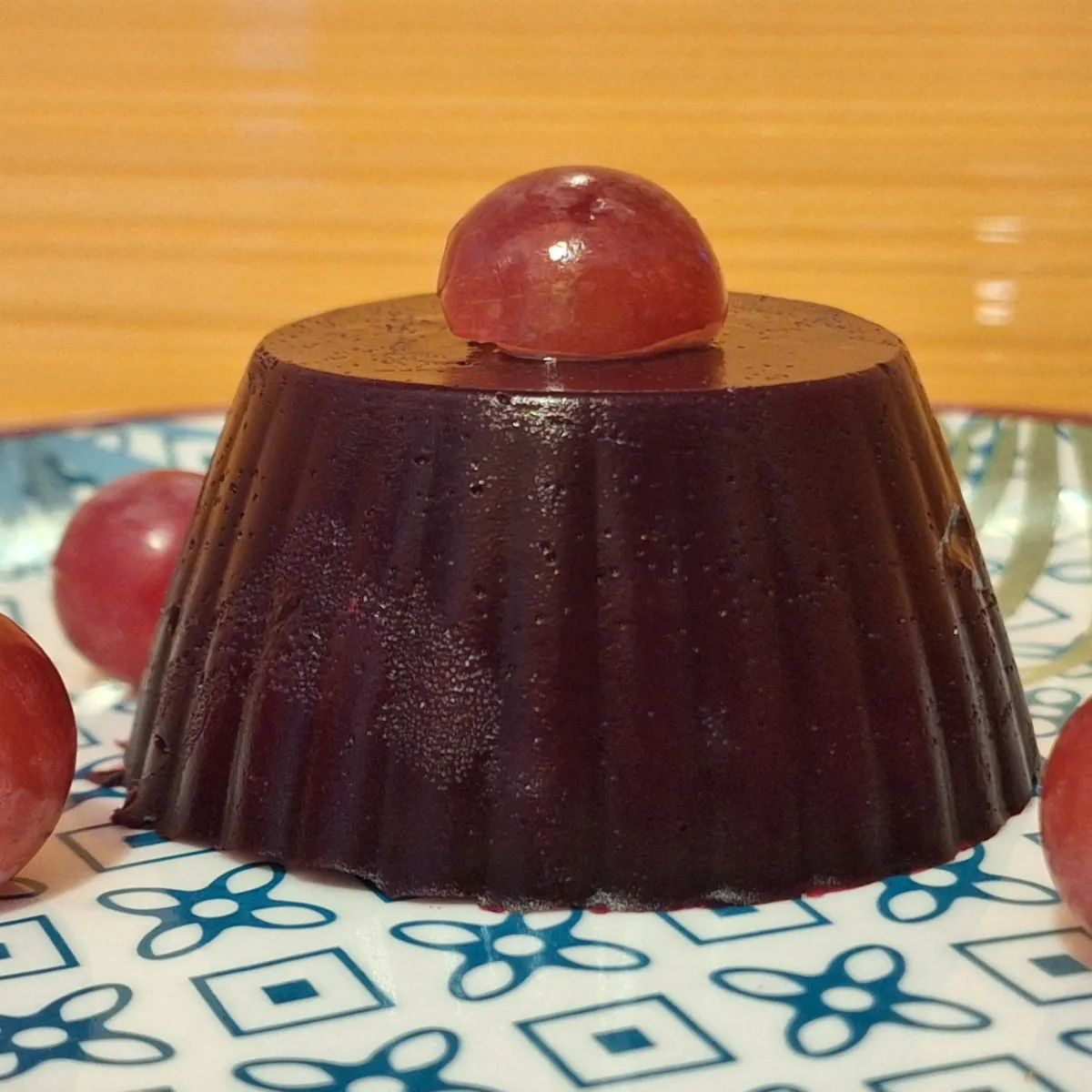
Grape Pudding (Sugolo)
1. Ingredients
| Ingredient | Quantity |
|---|---|
| Grapes | 500 g |
| Cornstarch (or flour) | to taste, about 10% of the liquid obtained (e.g. 50 g per 500 ml) |
| Sugar or dates (optional) | to taste (see notes) |
The 500 g of grapes is weighed on the stalk; once cooked and strained you usually get between 350 and 450 ml of liquid, so the starch must be measured against the actual liquid, not the starting weight of the grapes.
2. Method
- Wash the 500 g grapes well, removing any dirt or impurities.
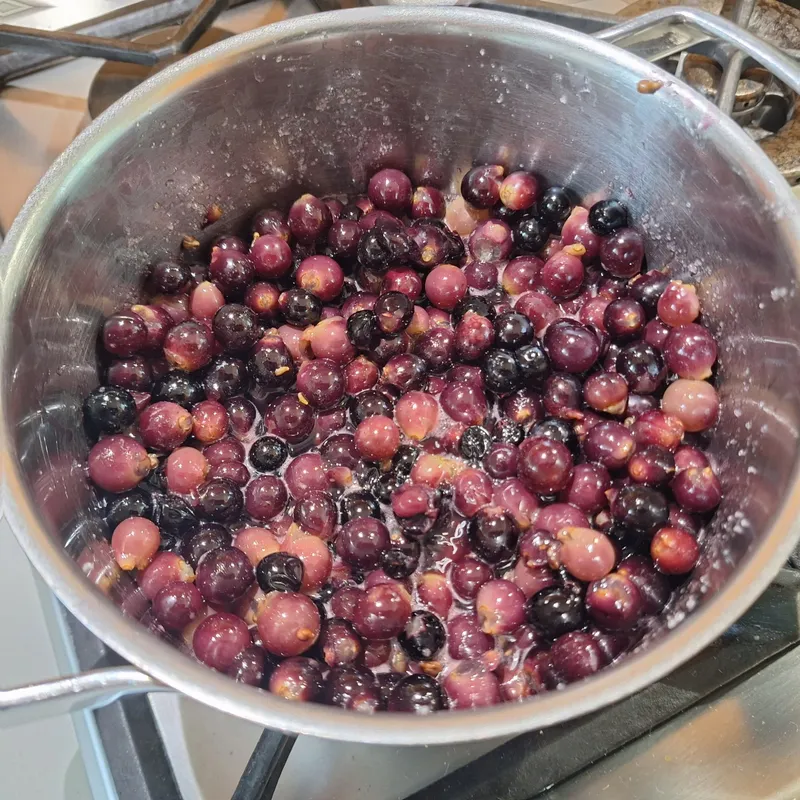
- Pull the grapes off the stalk and put them in a small pot or pan.
- Completely optional (I usually skip it): to sweeten, you can add now 10-20 g of sugar, or 20-30 g of finely chopped dates. Jujubes also work very well, but they are hard to find.
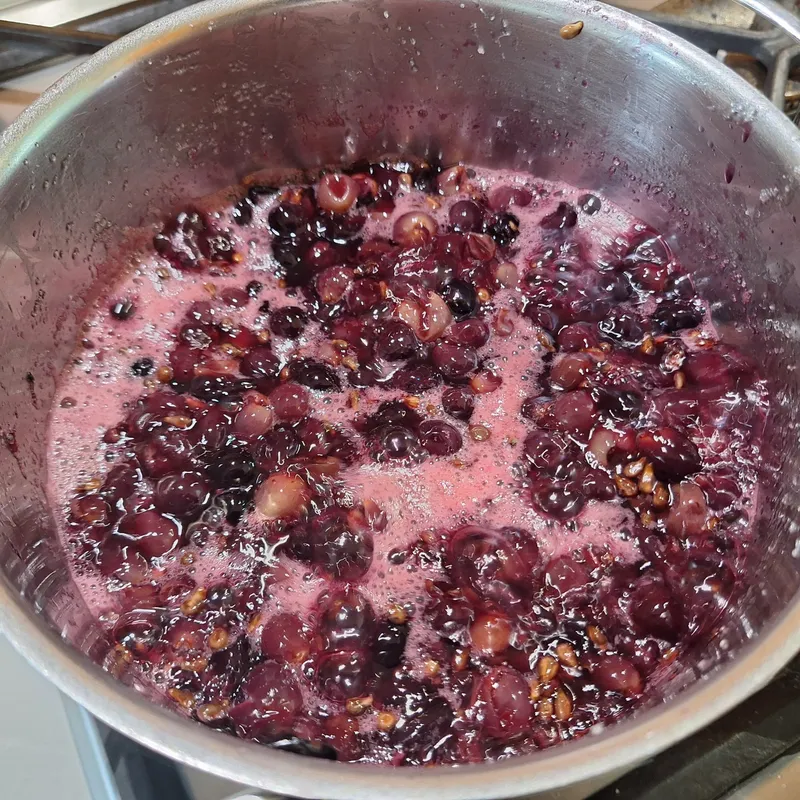
- Cook over medium-high heat until the grapes have completely broken down and the liquid is bubbling. This usually takes 15-20 minutes.
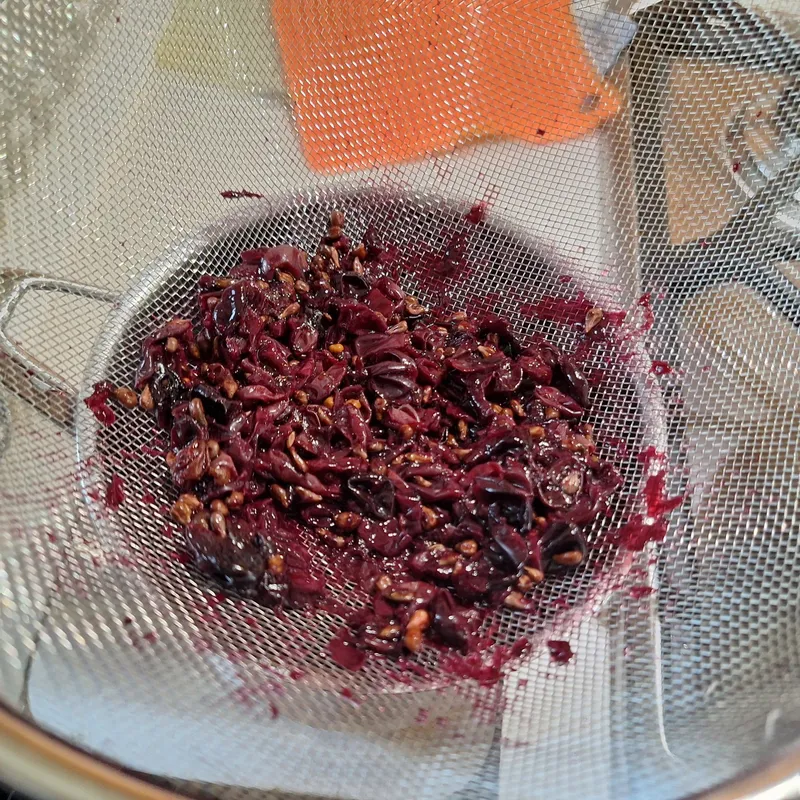
- Strain the liquid into another pot or pan. Press the solid residue well to extract more liquid: a potato ricer works great. The residue holds the skins and seeds, as you can see in the photo.
- Weigh the liquid obtained and add 10% cornstarch (or flour): for example 50 g of starch per 500 ml of liquid. For a firmer pudding use 12% (60 g per 500 ml). Whisk the starch well into the liquid to remove any lumps.
- Heat the liquid with the starch over medium-low heat, stirring constantly with a spatula until it thickens. The pudding is ready when it resists the spatula and almost pulls away from the bottom, just like a custard.
- Pour into moulds or a single mould and let cool. First at room temperature, then in the fridge so it sets firmly.
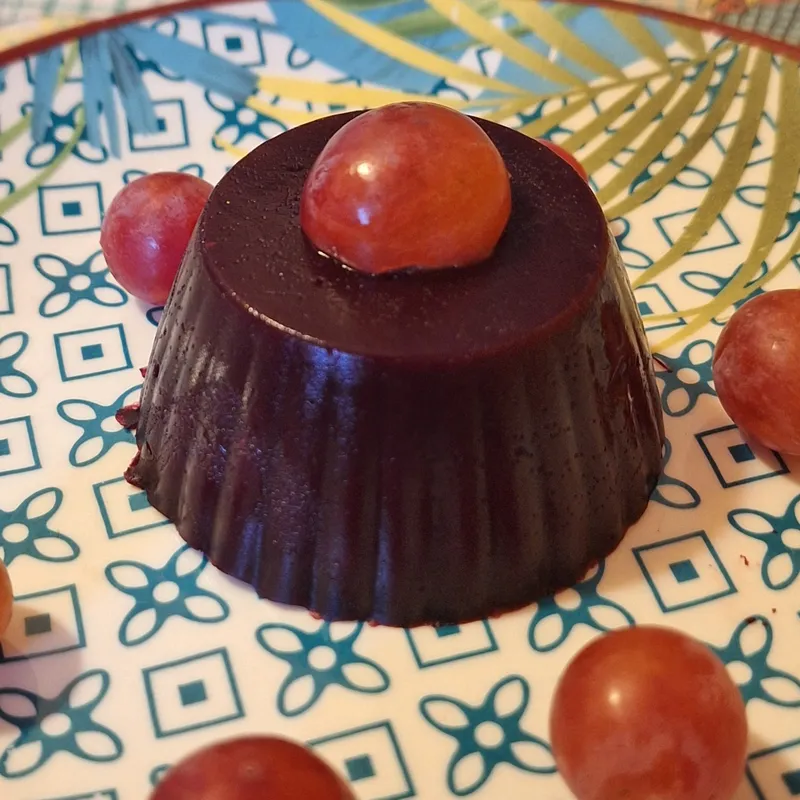
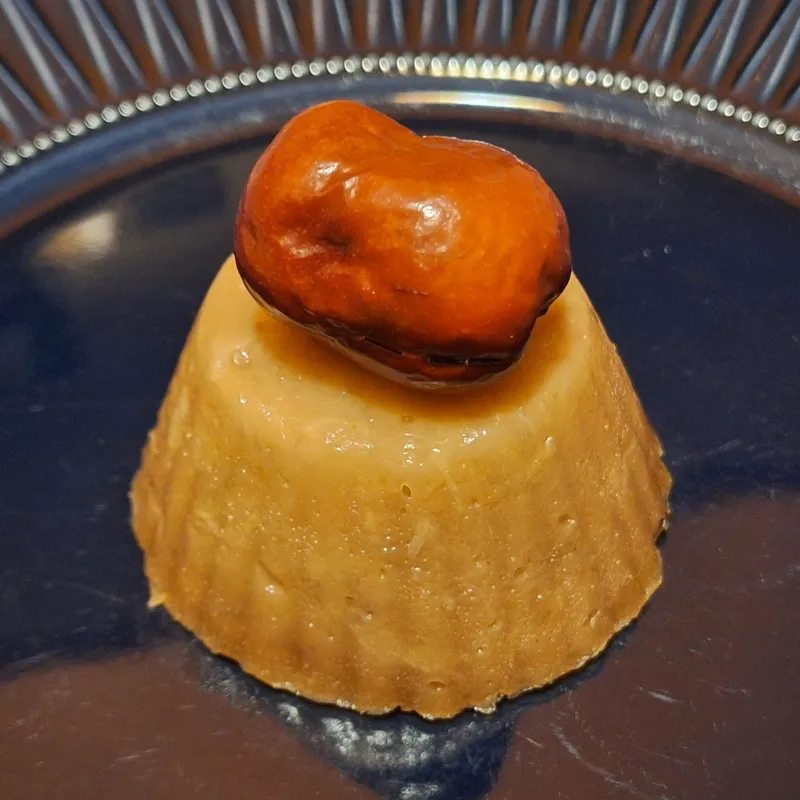
3. Technical Notes
A grape-harvest use-it-up dessert
Grape pudding is a peasant dessert from the Po Valley, known as sugolo (or sugoli, sugoi, sugal depending on the area) around Mantua, Verona, the Polesine and the Ferrara region. It was born at harvest time from a share of must that did not go into the barrels: it was cooked with flour until thick and left to rest in bowls. Just two ingredients, grapes and starch, with no eggs or dairy.
A note on sugar
In this recipe sugar is usually not needed: grape pudding comes out very sweet on its own, because grapes are rich in their own sugars. Dates or jujubes are a different matter: besides sweetening, they also change the aromatic profile as well as the colour. They are worth trying not so much to add sweetness, but for the different flavour they bring.
A note on grapes: which to use?
You can use pretty much any grape. I have tried both red and white grapes and it turns out great either way: what changes most is the colour of the pudding, darker and more intense with black grapes, lighter and golden with white ones. The Po Valley tradition uses aromatic dark grapes such as fragola (strawberry grape) or Lambrusco, very fragrant, but they are not essential: ripeness and sweetness matter more than the exact variety.
Starch: how much and why
The amount of starch should always be related to the liquid, not to the starting grapes, because juice yield varies with variety and ripeness. The traditional reference is about 10-12% of the liquid's weight: 10% gives a soft, spoonable pudding, 12% a firmer one you can unmould. Cornstarch gives a smoother, glossier texture and stays gluten-free; plain flour works just as well.
Seeds and straining
Straining removes both skins and seeds. The seeds, if crushed during cooking, can release bitter, tannic notes. That is why it pays to press the residue to extract the juice, but without going so hard that you shatter the seeds. I usually use a medium-mesh sieve or a potato ricer. Try as I might, the potato ricer cannot break the seeds.
4. Variants
- With dates: add 20-30 g of finely chopped dates to the grapes before cooking. They sweeten and bring a warm, malty note, with a darker colour.
- With jujubes: excellent result, they sweeten and add a distinctive fragrance. The catch is availability, they are hard to find.
- White grapes: same method, a lighter, golden pudding with a more delicate taste.
- With a spiced note: a strip of lemon or orange zest, or a small piece of cinnamon, cooked with the grapes and then strained out.
5. Storage
- Refrigerator: keeps for 4-5 days, covered. Like all starch-set puddings it tends to firm up in the cold due to starch retrogradation; it is normal for it to become compact after resting in the fridge, which also makes it easier to remove from the mould.
- Room temperature: only the time to cool and serve, then better in the fridge. It is a moist, sugary food, so it should not be left out for long.
- Freezer: technically it can be frozen for a couple of months, but like all starch puddings it tends to release water on thawing (syneresis) and turn grainy or spongy, losing the smooth texture. If you do freeze it, better to portion it and thaw slowly in the fridge; the result is better eaten with a spoon than unmoulded. In general sugolo is at its best fresh, within the fridge days.
6. References
- La Cucina Italiana, Budino di uva: lacucinaitaliana.it
- CiboToday, Storia e ricetta del sugolo d'uva: cibotoday.it
- Mincio e Dintorni, Sùgolo mantovano: mincioedintorni.com
- Treviso Today, Sugoi, Veneto recipe: trevisotoday.it