🫐 100% Plant-Based Fruit Crumble
100% plant-based fruit crumble. Crunchy crumbled topping with rolled oats. A simple, quick and utterly delicious recipe.
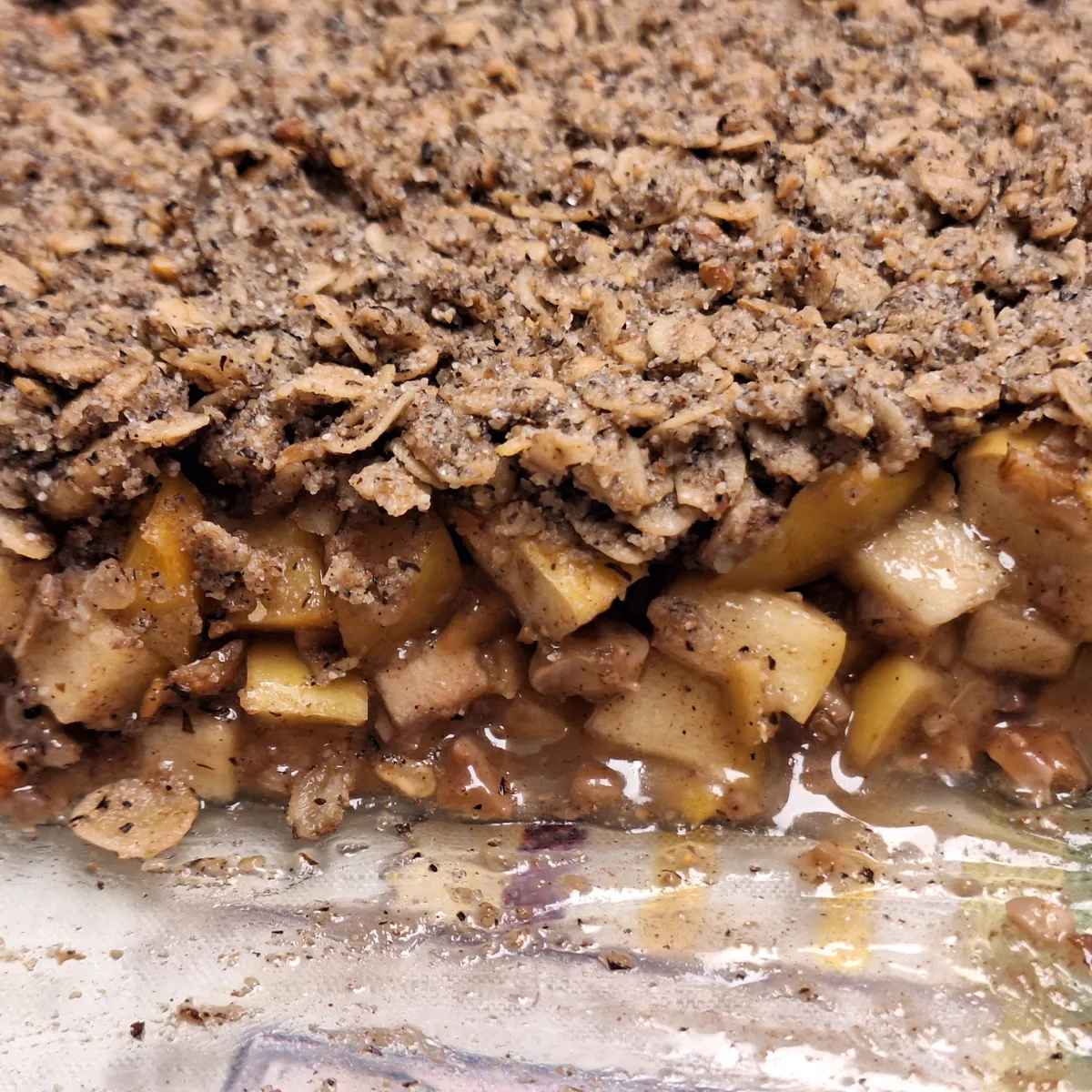
100% Plant-Based Fruit Crumble
1. Ingredients
Crumble topping
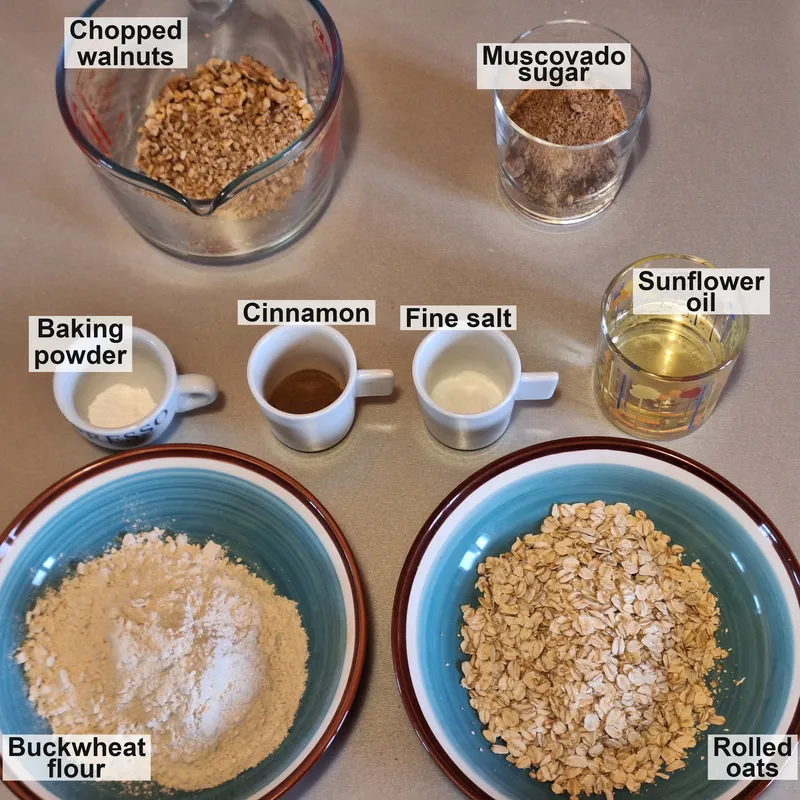
| Ingredient | Quantity | Notes |
|---|---|---|
| Buckwheat flour | 100 g | Nutty flavour; gluten-free. See the Variants section for alternatives |
| Rolled oats | 80 g | Large flake rolled oats. Not instant oats |
| Sunflower oil | 80 ml | Or mild extra-virgin olive oil. Can be reduced to 75 ml if the mixture already looks moist. See Technical Notes for an oil comparison |
| Muscovado sugar | 80 g | Caramel flavour that pairs well with buckwheat. Alternatives: light brown sugar (more neutral) or white sugar (maximum crunch). Can be reduced by a quarter if the fruit is very sweet |
| Roughly chopped walnuts | 40 g | Amplify the nutty tone of the buckwheat flour |
| Fine salt | 2 g | ½ teaspoon |
| Ground cinnamon (optional) | 2 g | 1 teaspoon. Pairs well with apples, pears and berries. Less suitable with strawberries, apricots and delicately flavoured fruit |
| Baking powder (optional) | 3 g | ½ teaspoon; for extra crunch |
Fruit filling
| Ingredient | Quantity | Notes |
|---|---|---|
| Total fruit | 650 g | Sum of the fruit listed below |
| Apples (thinly sliced) | 300 g | About 150 g each, peeled |
| Peaches (sliced) | 200 g | About 100 g each |
| Blueberries | 150 g | Whole |
| Walnut pieces | 30 g | For crunch in the filling |
| Muscovado sugar | 40 g | Reduce if peaches are very sweet. Alternatives: light brown sugar or white sugar |
| Cornstarch | 10 g | Thickens the fruit juices |
| Lemon juice | 15 ml | Balances sweetness and prevents oxidation |
| Ground cinnamon (optional) | 1 g | ½ teaspoon. Great with apples and pears; less suitable with strawberries, apricots and delicate fruit |
2. Method
- Preheat the oven to 180 °C (conventional, no fan).
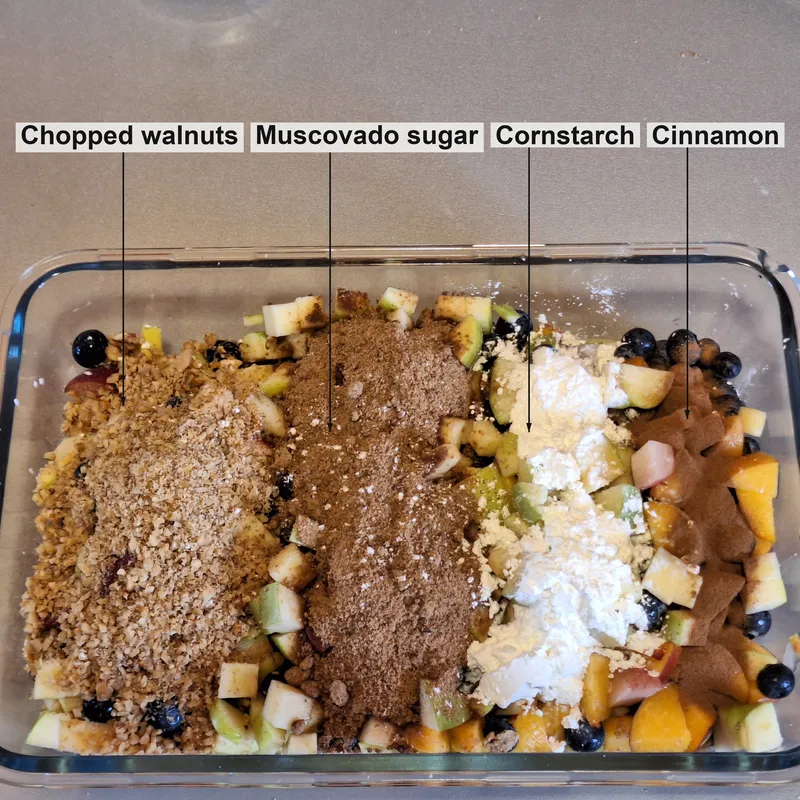
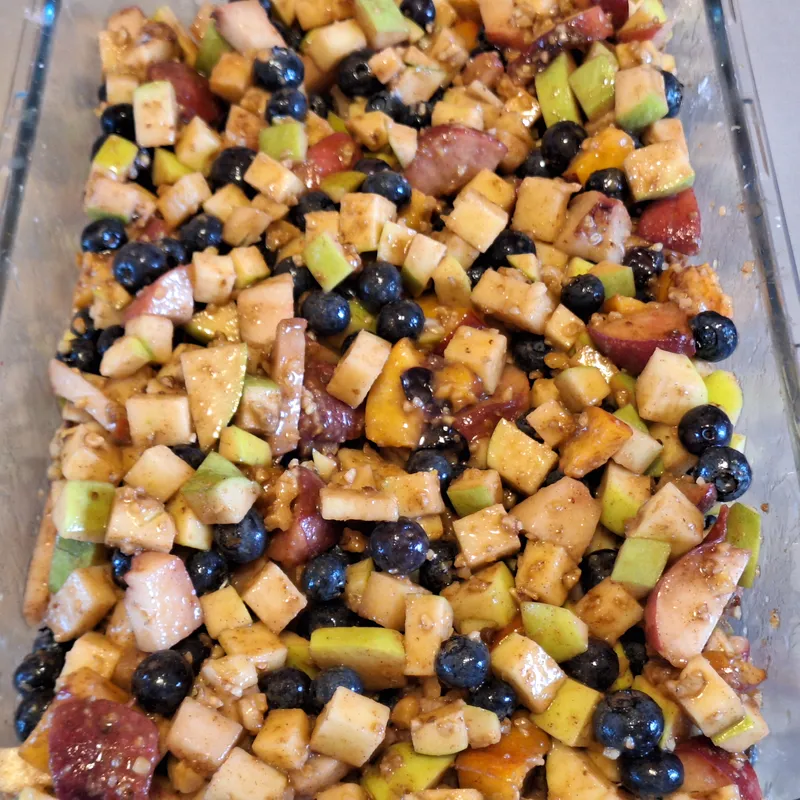
- Prepare the filling: toss 300 g apples (thinly sliced), 200 g peaches (sliced) and 150 g blueberries with 40 g muscovado sugar, 10 g cornstarch, 15 ml lemon juice and 1 g ground cinnamon (optional). Pour into the baking dish. Scatter 30 g walnut pieces over the fruit.
- Prepare the topping: in a bowl, mix 100 g buckwheat flour, 80 g rolled oats, 80 g muscovado sugar, 2 g salt, 40 g chopped walnuts, 2 g ground cinnamon (optional) and 3 g baking powder (optional). Pour in 80 ml sunflower oil and stir with a fork until you get rough crumbs.
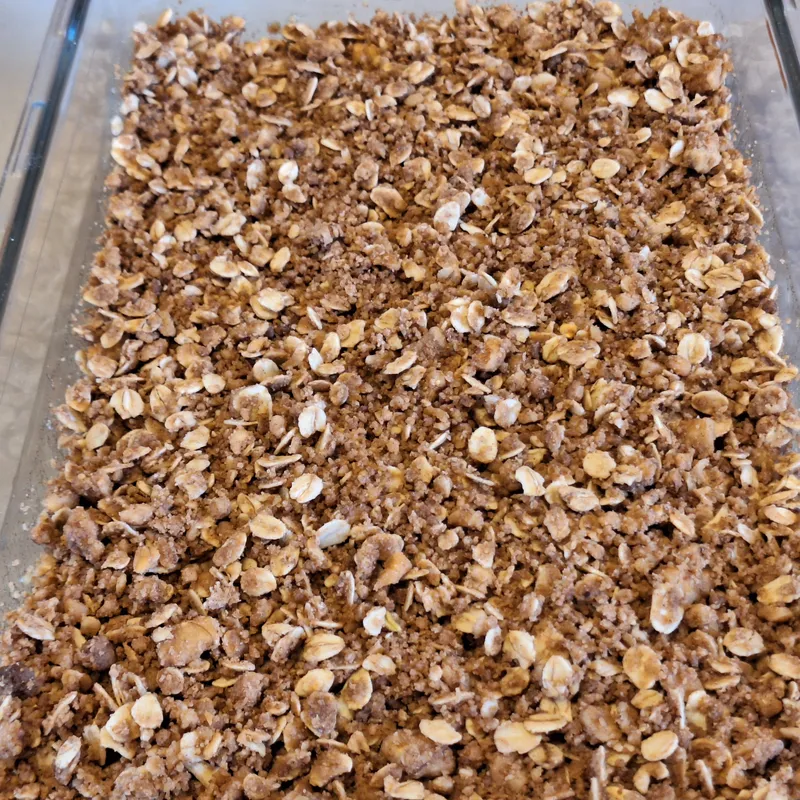
- Form the clumps: squeeze the mixture between your fingers to create irregular clumps of different sizes. This step is essential for a crunchy, not sandy, topping.
- Assemble: scatter the crumble over the fruit evenly, forming a layer at least 1 cm thick. Do not press down.
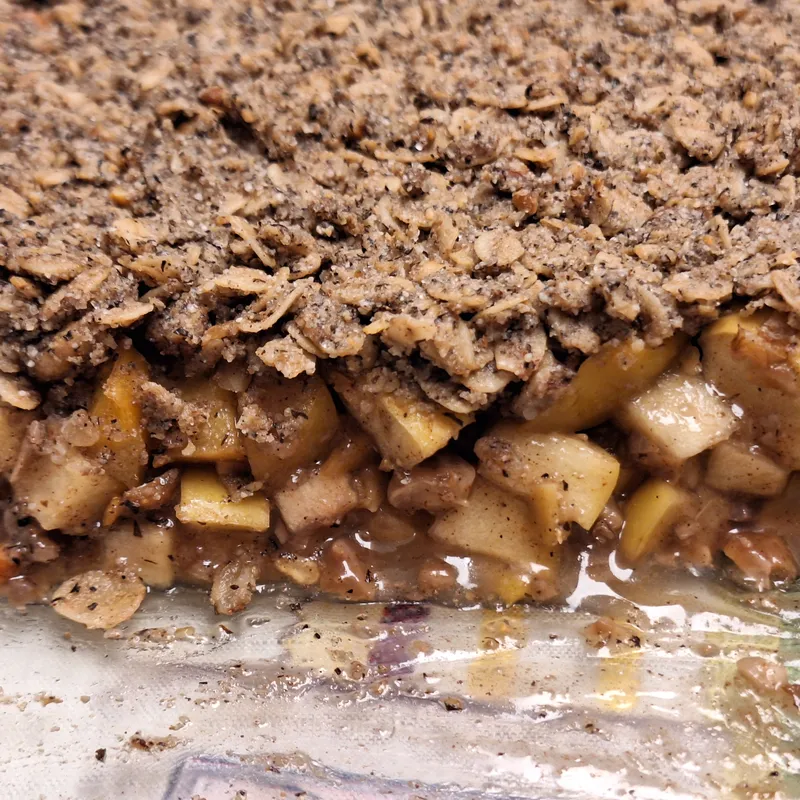
- Bake: cook for 35-40 minutes, until the topping is golden and the fruit juices are bubbling at the edges of the dish.
- Rest: let it sit for at least 15-20 minutes before serving. The crumble firms up and becomes crunchier as it cools.
3. Storage
- Before storing: let the crumble cool completely before covering or storing; trapping steam accelerates sogginess.
- Room temperature: consume within a couple of days, in a covered container. The topping gradually loses its crunch from contact with the fruit's moisture.
- Refrigerator: keeps for up to one week, covered. It can be reheated in the oven before serving to restore some of the crunch.
- Freezer: can be frozen either baked or raw. The best method is to freeze the crumble topping separately from the fruit filling, so the topping keeps its crunch. In an airtight bag, the raw topping keeps in the freezer for up to 3 months. The baked crumble can be frozen in an airtight container for about 2 months. To reheat: place straight from the freezer into the oven at 180 °C for 20-30 minutes, without thawing first. The topping regains its crunch well in the oven; avoid the microwave, which makes it soggy.
4. Variants
Flour choice
The recipe works with different types of flour without significantly changing the proportions:
- Italian 00 or type 1 flour: a more neutral, delicate result; the topping is closer to a classic English crumble.
- Wholemeal flour: slightly more rustic flavour; a little more absorbent, the crumble turns out a bit drier.
- Buckwheat flour: nutty, earthy flavour; the most crumbly of the three because it is gluten-free, and it pairs very well with apples, pears and berries. It absorbs slightly more liquid than the others; if the mixture seems too dry, add a drizzle more oil.
Fruit pairings and seasonality
The apple, peach and blueberry combination is a summer classic, but crumble lends itself to many variations. Some general rules for adapting the filling:
- Always keep some apples (at least 30-40% of the total fruit) in the mix: apples give body and structure to the filling, absorb excess juice and provide a solid base for the other fruits.
- Very juicy fruit (peaches, strawberries, cherries) releases more juice during baking: increase the cornstarch by 50% and add a little more lemon juice.
- Low-moisture fruit (apples, pears) needs less starch: the base amount is sufficient.
- Very sweet fruit (ripe peaches, figs, bananas) needs less sugar in the filling: reduce by about a quarter.
- Tart fruit (blueberries, redcurrants, rhubarb) needs more sugar in the filling (increase by 25-50%) and less lemon.
Cinnamon and spices
Cinnamon does not suit all fruits:
- Recommended: apples, pears, berries (blueberries, blackberries), rhubarb.
- Optional: peaches, figs, cherries (can work, but is not essential).
- Best avoided: strawberries and apricots, which have a delicate fragrance that cinnamon tends to overpower.
- Alternative: ground ginger is an interesting option, especially with rhubarb and pears.
Seasonal pairings
- Summer: peaches + blueberries + raspberries (classic); strawberries + rhubarb; apricots + raspberries; figs + walnuts.
- Autumn: apples + pears + cinnamon (the quintessential combination); apples + blackberries + ginger; apples + blueberries + walnuts; plums + almonds.
- Winter: apples + pears + walnuts + cinnamon; apples + frozen blueberries; pears + dark chocolate (indulgent variation).
- Spring: rhubarb + strawberries; apples + rhubarb.
Notes on individual fruits
- Apples: provide body and structure; available all year round.
- Pears: sweet and soft, they break down easily; cut them into larger pieces.
- Peaches and nectarines: juicy and fragrant, ideal in summer; they release a lot of juice.
- Blueberries: tartness and colour; no need to slice them.
- Raspberries: delicate, they fall apart during baking; add them whole and fold gently.
- Blackberries: an autumn fruit that pairs perfectly with apples.
- Strawberries: very watery; cut into large pieces and use more starch.
- Rhubarb: very tart; increase the filling sugar by 50% or more, and reduce the lemon.
- Plums: autumnal and juicy.
- Apricots: a summer fruit, pleasantly tangy.
- Figs: very sweet, need less sugar in the filling; excellent paired with walnuts.
- Cherries: need to be pitted; very watery, use more starch.
5. Technical Notes
Oil: which to use
- Sunflower oil: completely neutral flavour; ideal for those who want no aromatic interference in the dessert. A safe, all-purpose choice.
- Extra-virgin olive oil: the most widely used fat for butterless crumbles. It adds an aromatic note that pairs well with summer fruit (strawberries, figs, peaches), but can be overpowering with more delicately flavoured fruit. Choose a mild EVOO (light fruity).
- Walnut oil: a sophisticated choice that reinforces the walnut flavour in the crumble. Excellent when the topping already contains chopped walnuts.
- Rapeseed/canola oil, grapeseed oil: perfectly valid neutral alternatives.
Reference ratio
The reference ratio for the topping is:
(flour + oats) : oil : sugar ≈ 2 : 0.8 : 1
In practice: for every 100 g of dry component (flour + oats), you need about 40-55 ml of oil and 50-65 g of sugar. The ingredient table quantities follow this ratio. The sugar in the topping is kept towards the lower end (80 g) because the fruit filling already contains sugar of its own.
Mixing technique
- Mix the dry ingredients in a bowl (flour, oats, sugar, salt, cinnamon if using, baking powder if using).
- Add the oil in a stream or all at once.
- Stir with a fork using a pressing motion until you get rough crumbs.
- Key step: squeeze the mixture between your fingers to form irregular clumps. Without this step, an oil-based crumble stays too sandy, because the oil is liquid and does not form clumps spontaneously the way cold butter would.
- If the mixture seems too dry, add a drizzle of oil. If it seems too wet, add a little flour.
Tips for crunchiness
- Baking powder: adding ½ teaspoon helps the crumble puff slightly during baking and become crunchier.
- Coarse sugar on top: sprinkling large crystals of sugar (turbinado or Demerara) over the crumble before baking creates an extra-crunchy crust.
- Oats are essential with liquid oil: they absorb excess oil and add structure. Without oats, an oil-based crumble is essentially a wet shortcrust.
- Chopped walnuts: add crunch and depth of flavour.
- Do not overmix: large, irregular clumps give the best texture. An overworked mixture becomes compact.
- Chill before baking: refrigerating the mixture for 15-30 minutes before baking can help the clumps hold together. An optional step.
Rolled oats
Use traditional rolled oats (large flakes). Not instant oats, which are too fine and fall apart during baking, nor steel-cut oats, which are too hard.
For a crumble made with flour and oil, the oats should be used whole: they give a rustic crunch and hold their shape during baking. With liquid oil, oats are essential for giving structure to the topping.
Salt
Salt is used in very small amounts to enhance flavours and balance the sweetness. Those who prefer to reduce or omit it can do so; it helps but is not a fundamental ingredient.
Common mistakes
- Using too much oil: the crumble turns into an oily mush. Start with less (75 ml) and add a tablespoon at a time if the mixture seems too dry.
- Not forming clumps by hand: without this step, an oil-based crumble stays sandy and uniform. This is the most important moment in the preparation.
- Overmixing: the crumble becomes compact like a shortcrust and loses its crumbly nature.
- Forgetting the oats: oats are the best ally of liquid oil for creating structure and crunch.
- Baking at too low a temperature: below 170 °C the crumble does not brown and stays soft. The ideal temperature is 180 °C.
- Expecting the same result as butter: a butterless crumble is different; lighter and with a cleaner taste that lets the fruit shine through. It is crunchy and crumbly, but does not have the typical character of butter. This is not a flaw; it is a feature.
6. Sources
- Jessie Sheehan Bakes - jessiesheehanbakes.com
- Brightland / Noreen Wasti - brightland.co
- Maldon Salt / Graza - maldonsalt.com
- Chocolate & Zucchini (Clotilde Dusoulier) - cnz.to
- Food Nouveau (Marie Asselin) - foodnouveau.com
- GreenMe.it - greenme.it
- TGCom24 / Mediaset - tgcom24.mediaset.it
- Spadellandia - spadellandia.it
- BBC Good Food - bbcgoodfood.com
- Martha Stewart - marthastewart.com
- Gourmandelle - gourmandelle.com