🍔 Moulded Veggie Burgers (Carrot, Zucchini, Potato)
100% plant-based potato, carrot and zucchini burgers, cooked in a pan, pressed into a loaf tin, chilled and sliced into square burgers to sear. With a substitution guide (chickpeas, cannellini...
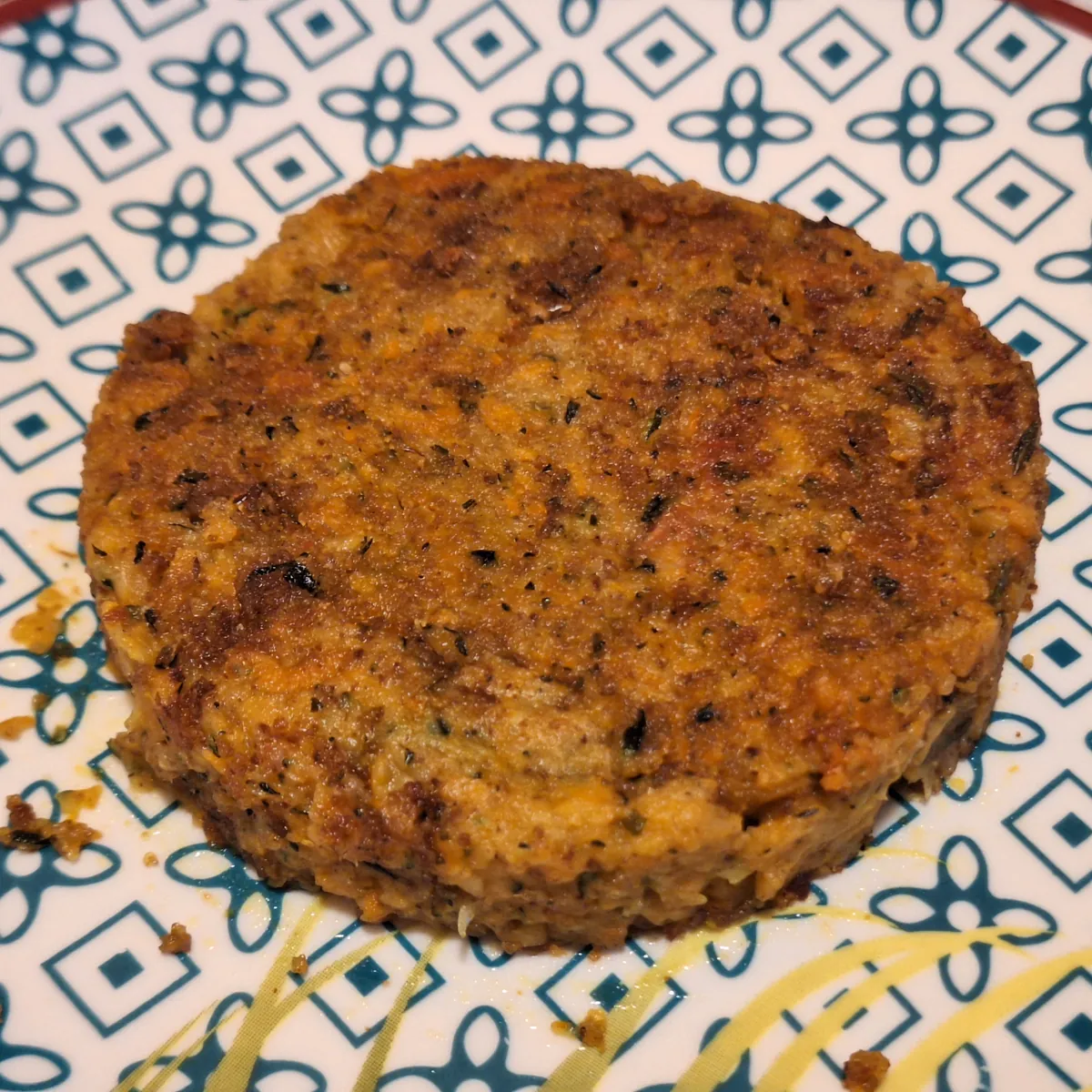
Moulded Veggie Burgers (Carrot, Zucchini, Potato)
What is the difference between these burgers and the hand-formed ones? Well, if you want a finished burger with a precise shape (round, heart-shaped, bigger/smaller, ...) then the hand-formed burgers give a more defined result, but this takes more time because you actually have to shape the burgers one by one. If instead you prefer a quicker preparation, once the mixture is ready you can put it into a container, as shown below, and refrigerate it; then when you need to cook the burgers, just take the mixture from the mould and cut the slices you need, where each slice will be a burger. Or, alternatively, you can also use it to make a vegetable bake (or vegetable and legume bake), as described in the vegetable bake recipe (link as soon as the recipe is published).
1. Ingredients
Dough
| Ingredient | Quantity |
|---|---|
| Peeled potatoes (or beans/chickpeas, see substitutions below) | 400 g |
| Carrots | 300 g |
| Zucchini | 250 g |
| Breadcrumbs (+ more for the crust) | 70 g |
| Olive oil | 30 g |
| Fine salt | 6 g |
| Black pepper, parsley and thyme (optional) | to taste |
2. Method
- Prepare the binding base: 400 g peeled potatoes (or legumes, see variants below). Boil the potatoes in their skins (20-30 minutes depending on size), peel while hot and mash with a potato ricer. Alternatively, if you're short on time, you can peel them, cut them into chunks and cook them covered in the microwave for about 8-10 minutes at full power, checking halfway and adjusting the remaining minutes. If instead you use legumes, use them cooked and well drained.
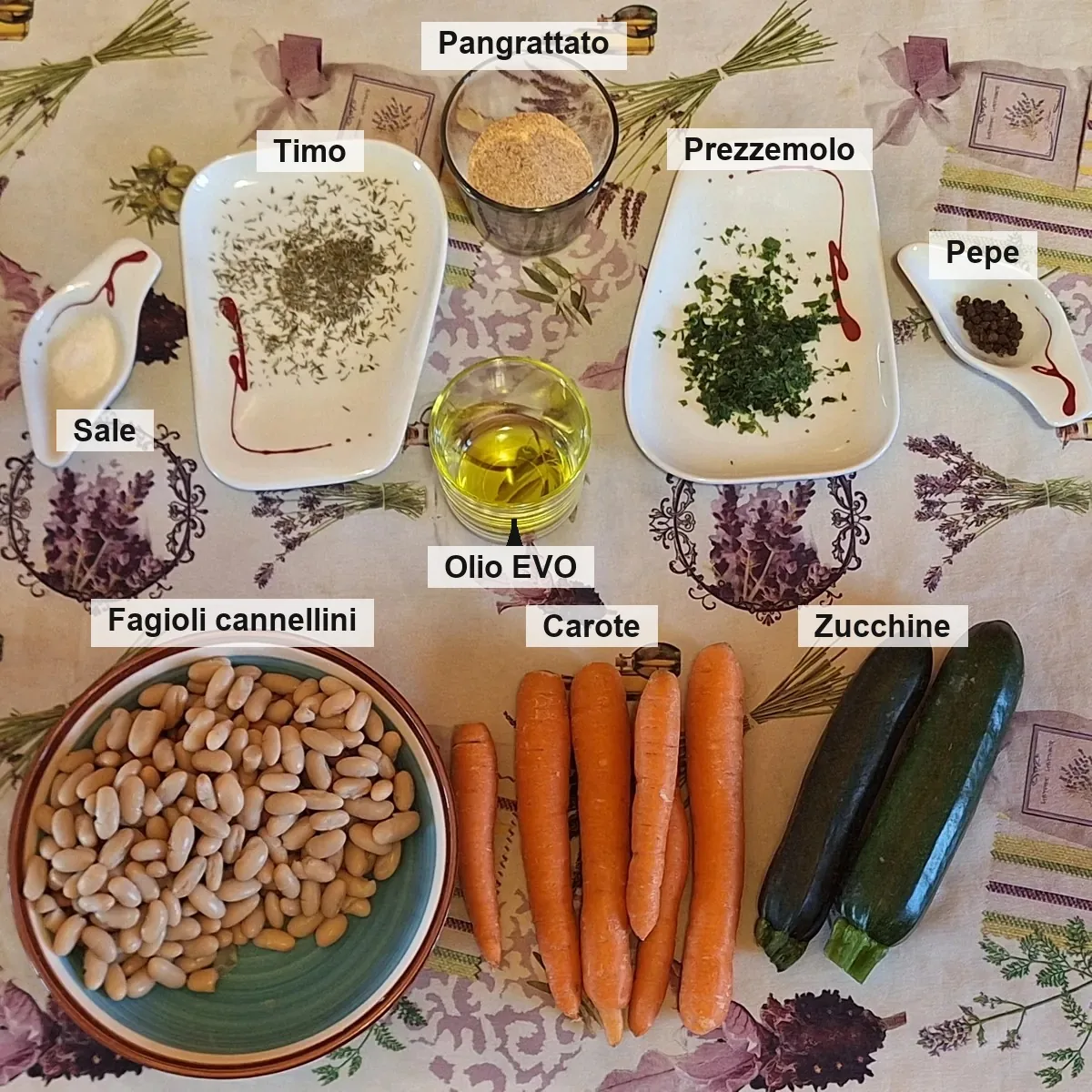
The ingredients: salt, thyme, wholemeal breadcrumbs, olive oil, parsley, pepper; below, cannellini beans with a few borlotti, carrots and zucchini. In this batch I used beans instead of potatoes (legume variant). - Finely chop with a knife (best) or coarsely grate (if in a hurry) the 300 g carrots and the 250 g zucchini. Optional: Lightly salt the zucchini and let them drain for 10 minutes, then squeeze the carrots and zucchini well. Even if you don't, the vegetables dry out later with the quick pass in the pan.
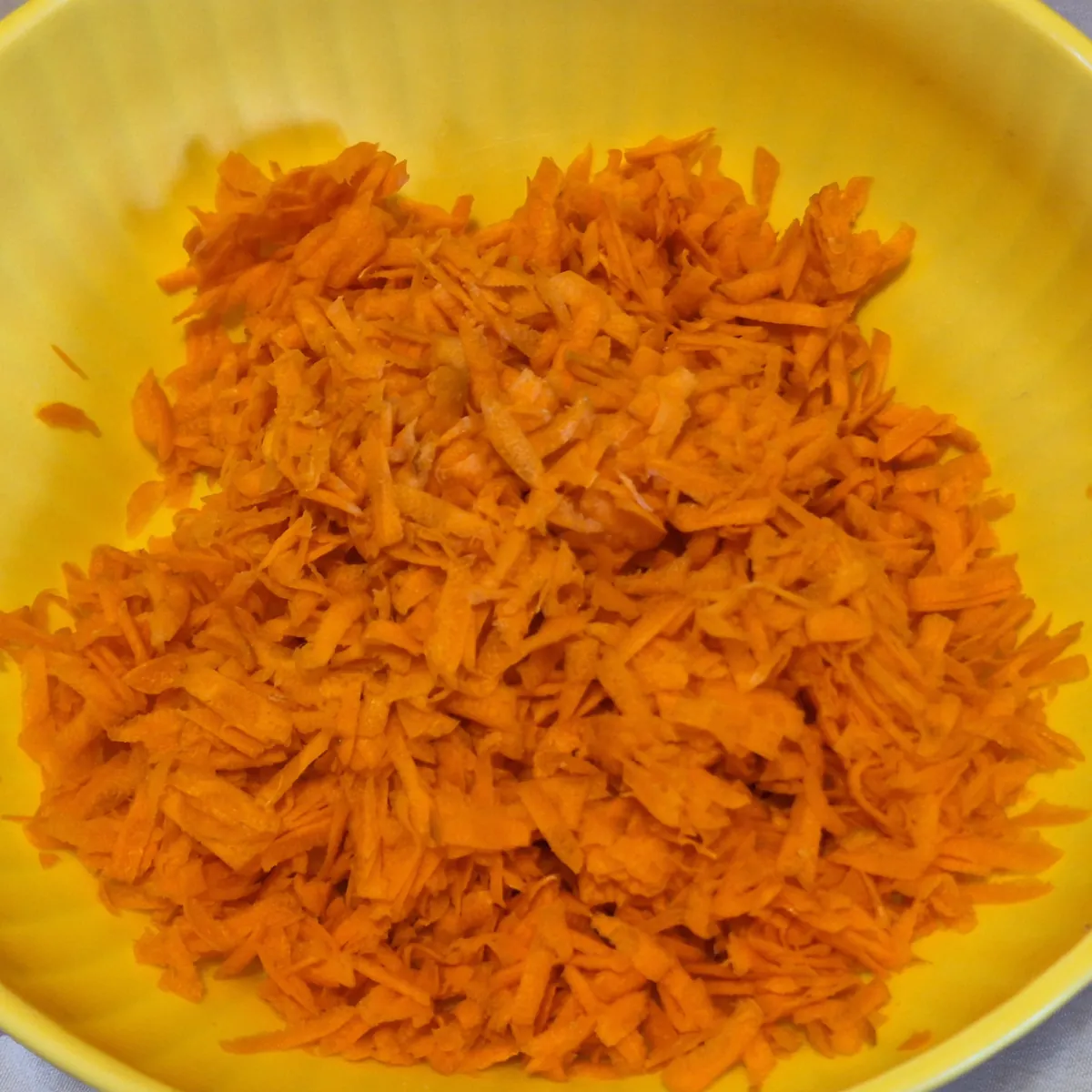
The grated carrots. 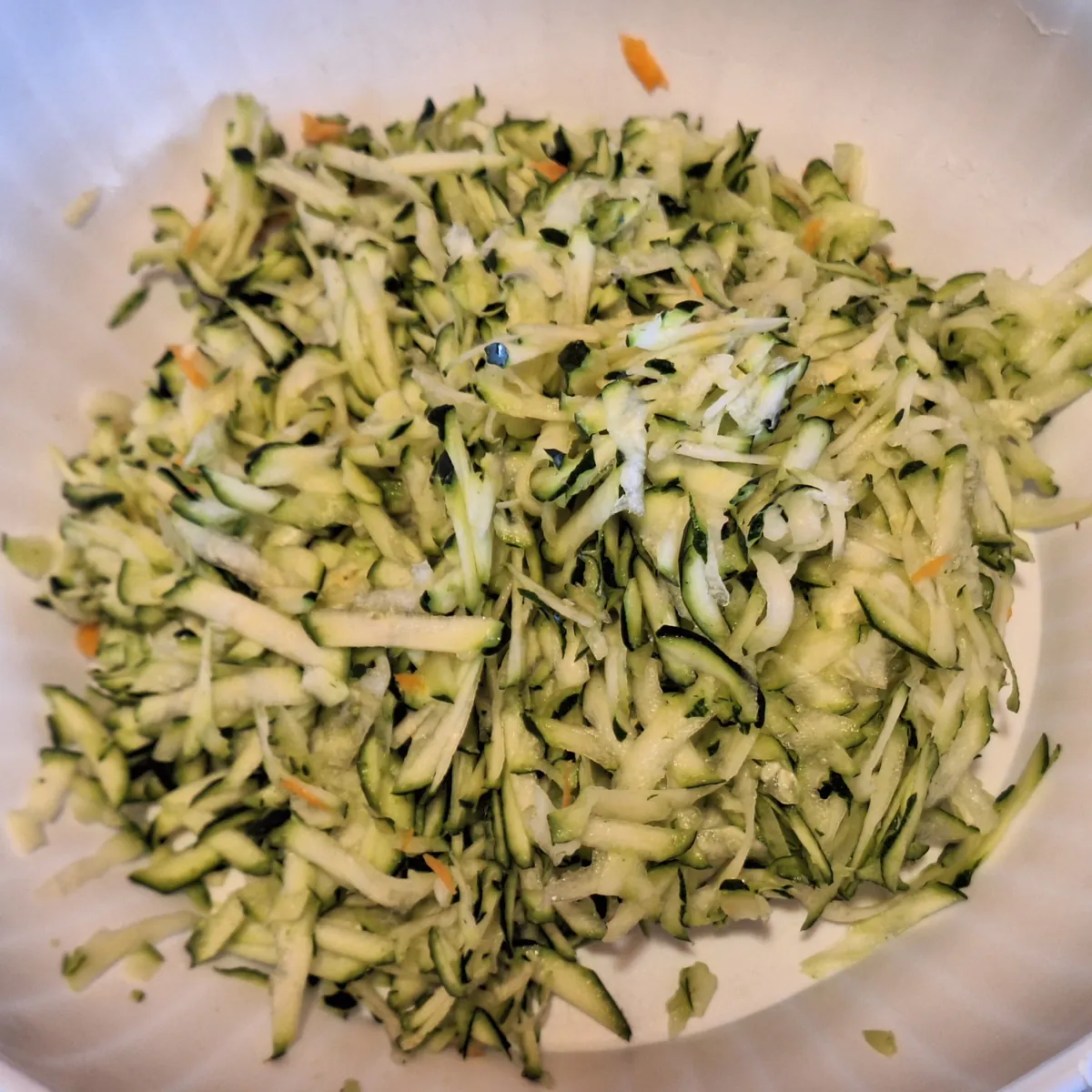
The grated zucchini. - Pan-cook.
- Heat the 30 g olive oil in a wide pan, add the squeezed carrots and zucchini and sauté over high heat for 5-8 minutes, stirring or tossing, until they dry out, like a soffritto. This step matters more with the "sliced technique" than with hand-formed burgers: cooking the mix drives off the residual moisture and activates the starches (once we've added them), which set and bind once cold.
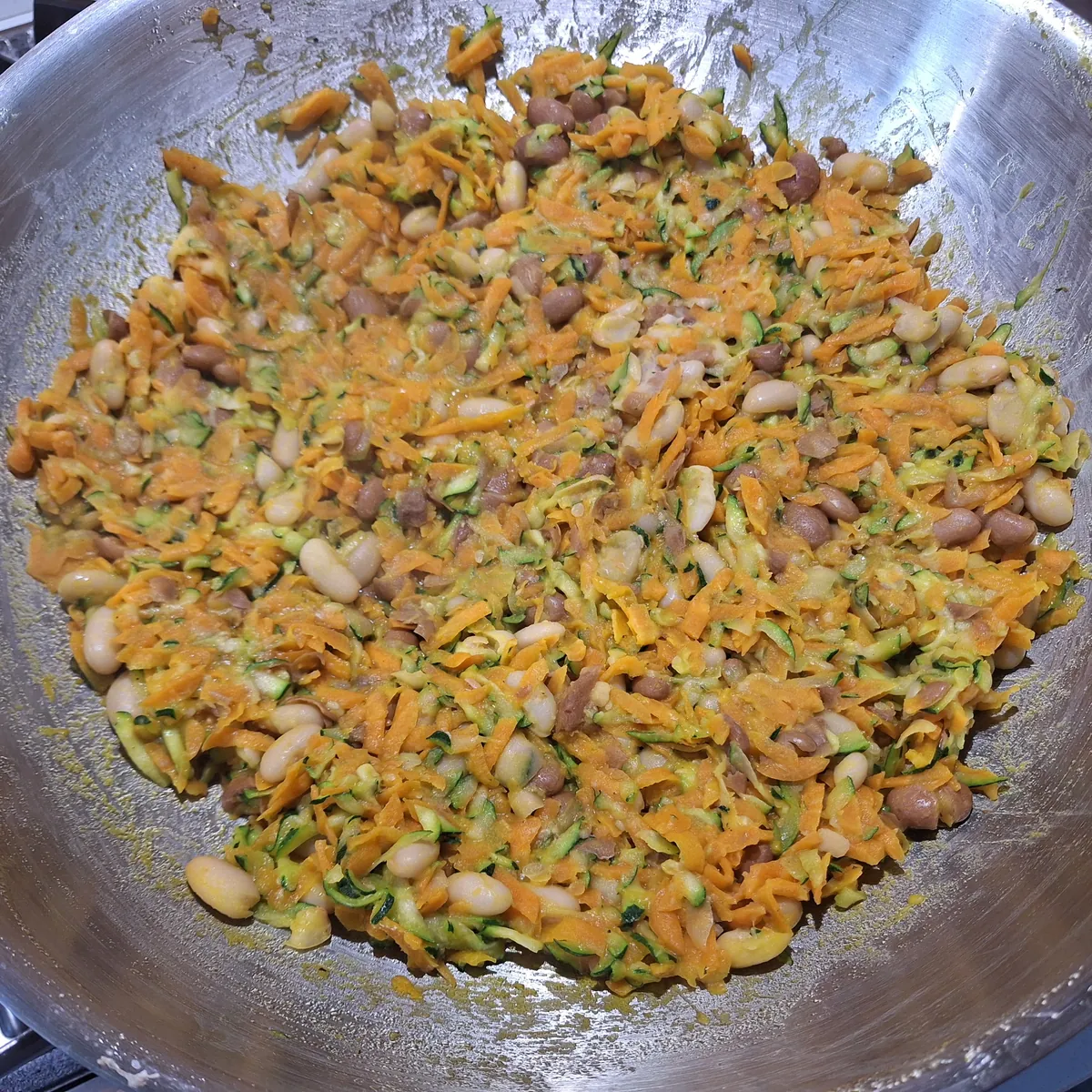
The pan-cooking in progress: carrots, zucchini, beans, salt and pepper drying out together. As explained below, potatoes can be swapped 1:1 with cooked beans or chickpeas. - Add the mashed potatoes (here the cooked, drained beans) and the 6 g salt to the pan. Cook and stir for a few minutes until the mixture compacts into a dense mass. If you use a pan that isn't non-stick (stainless steel, as in the photo, or aluminium) the mixture is almost ready when it starts to stick to the bottom: that's the sign the water has almost completely evaporated. Turn off the heat and let cool slightly.
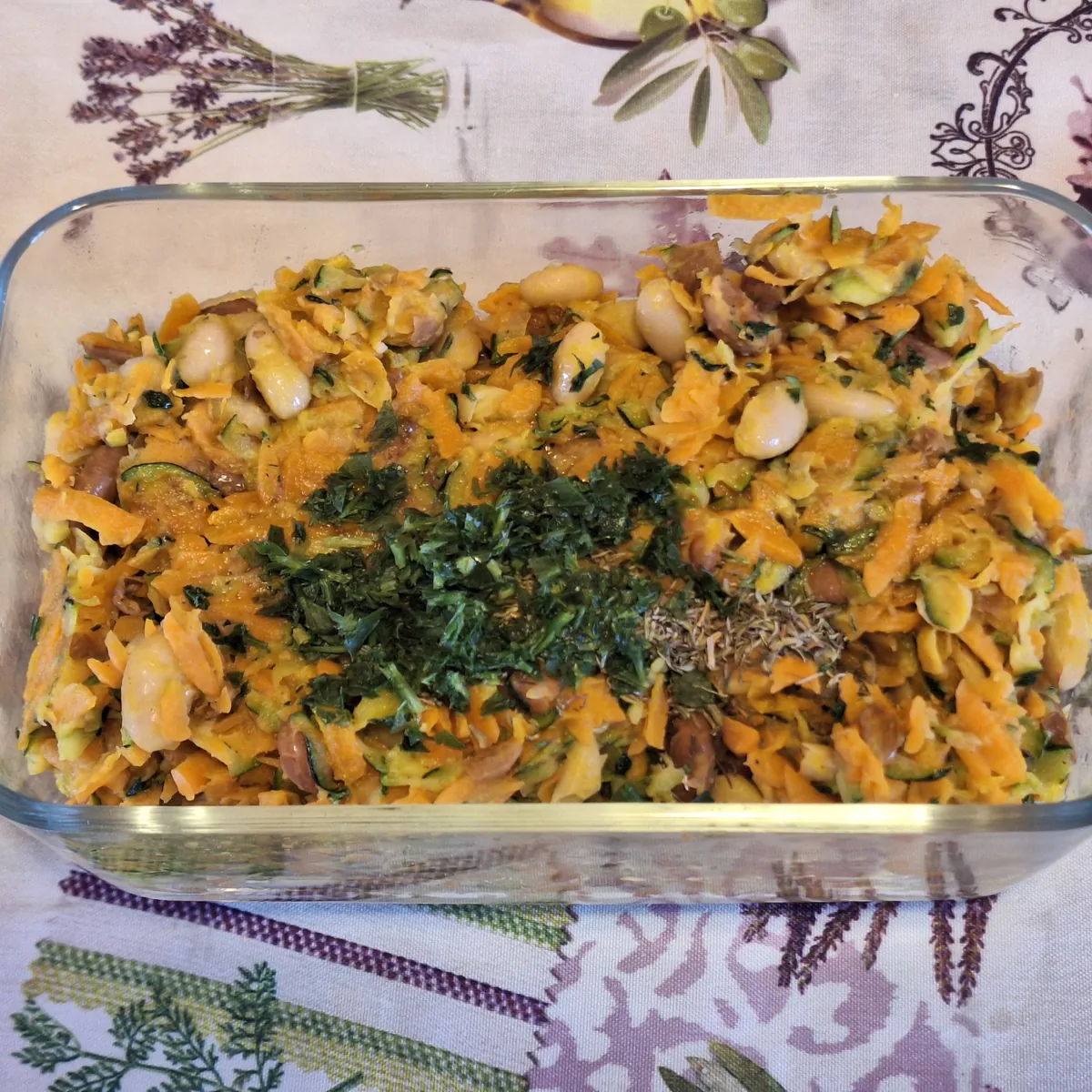
Once the pan-cooking is done, I move everything to a container and add thyme and parsley; then I blend and finally work in the breadcrumbs. - Mould and chill.
- Transfer the mixture to a baking dish or a loaf tin and add the pepper/parsley/thyme if using. Blend with an immersion blender to the texture you want: you can go very fine, like a purée, or leave it coarser for a bit of "bite", a matter of taste. Once blended, work in the breadcrumbs (about 70 g in total) a little at a time, until you reach a workable consistency, i.e. compact enough to shape into burgers. Press the mixture well into the container to remove air gaps and level the surface.
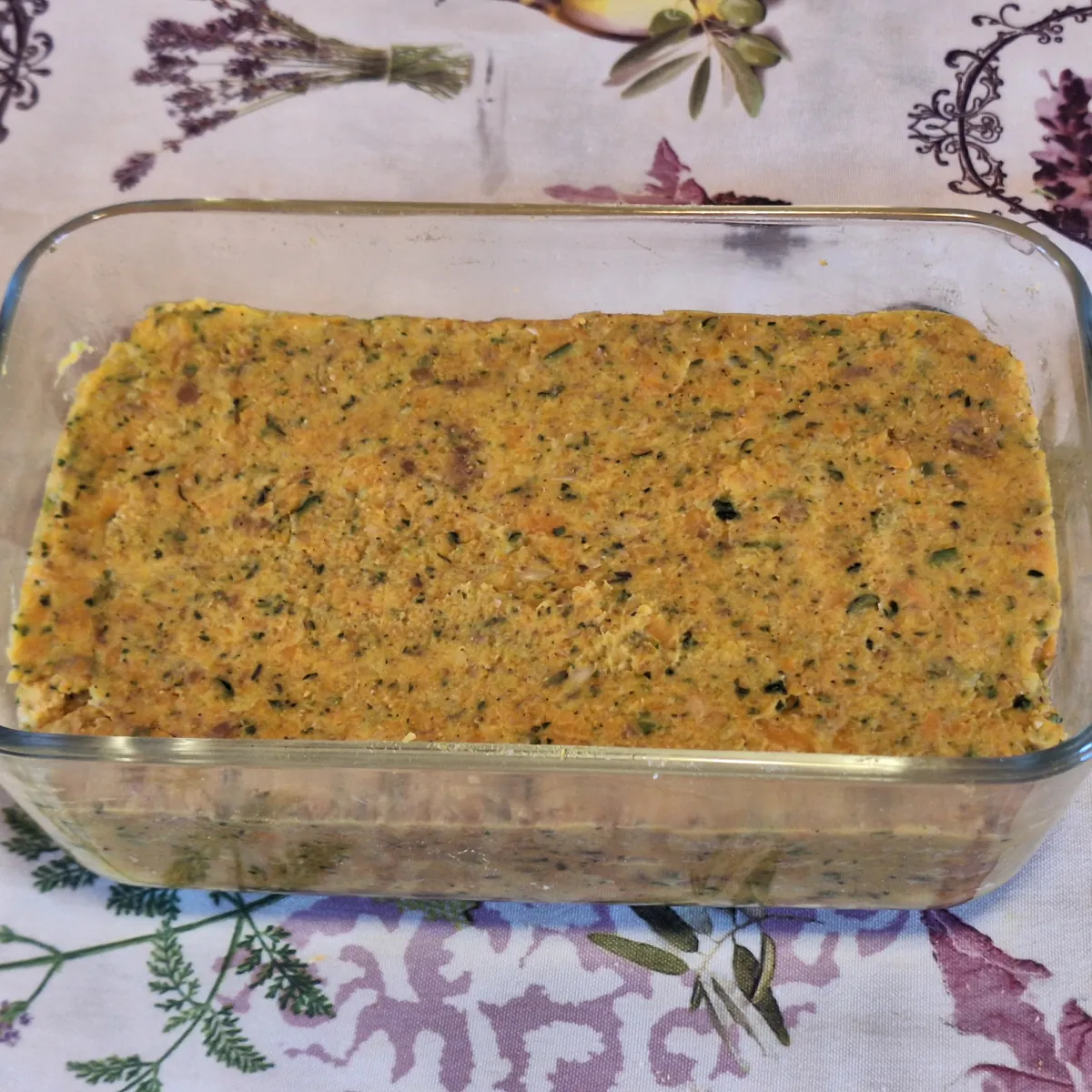
The final result, pressed firmly into the rectangular container. 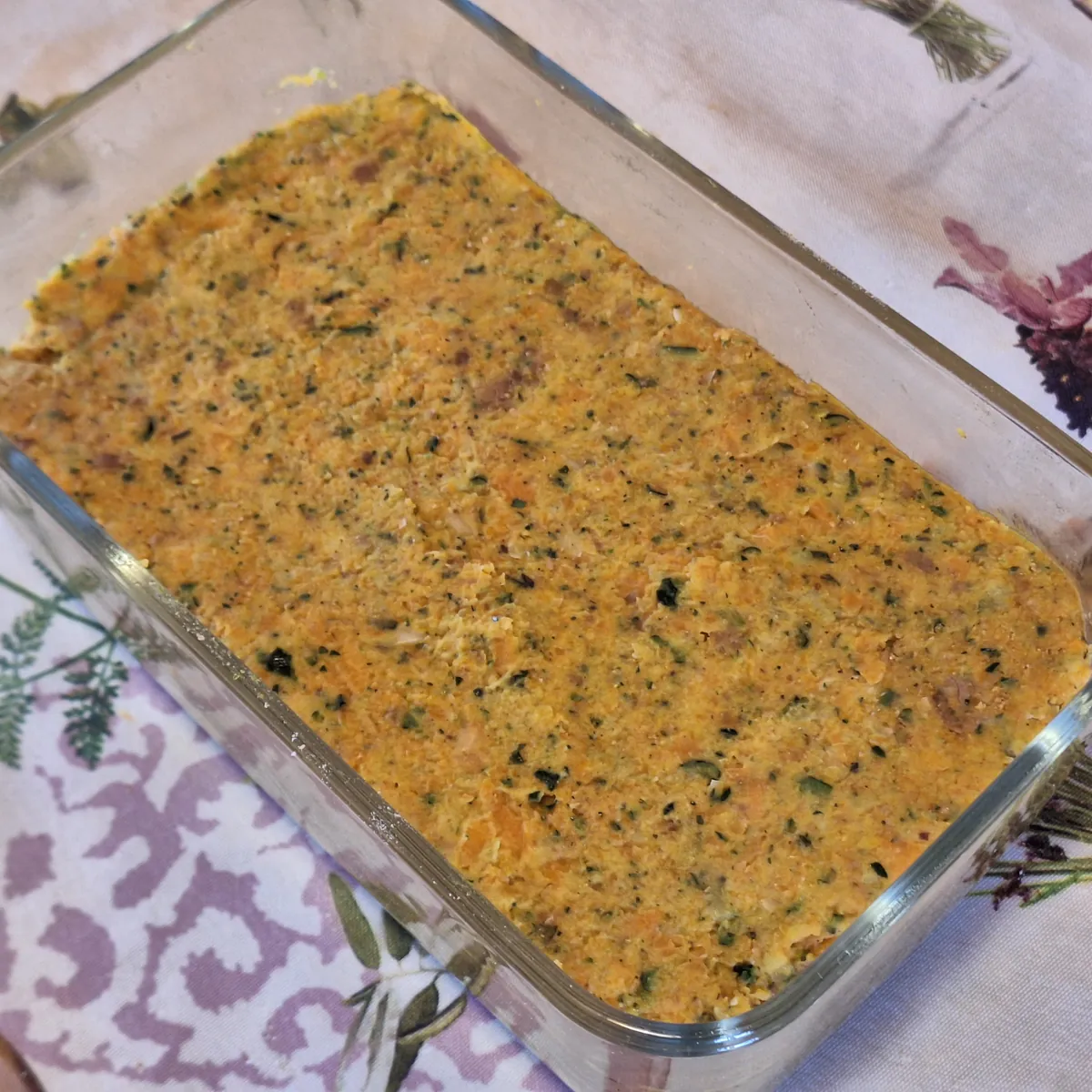
The same from another angle: ready to go into the fridge. Note: for burgers that are easy to shape and cook you want a really compact consistency, at least like modelling clay. If you don't mind a little while cooking, or you're aiming for a vegetable bake, you don't need it this compact. Here we're making burgers, so we want a compact mass: breadcrumbs are the ingredient we use to soak up the residual moisture and firm up the mixture.
- Cover and refrigerate for at least 2-4 hours, ideally overnight. The cold firms the mixture: it needs more time than a plain patty's rest because the mass has to set enough to be sliced.
- Slice and sear.
- Unmould the block by lifting the parchment and cut it with a sharp knife into slices about 2 cm thick: these are your square burgers, ready to go. Don't cut slices too thick, or they're hard to cook; alternatively you can cut thick slices to then press and flatten them. In that case be careful not to make the burgers too big, because they're more delicate to turn.
- Heat a little oil in a pan (or lay the slices on a tray). Dip the faces in breadcrumbs if you want a more pronounced crust and cook 2-3 minutes per side over medium heat until golden: the searing seals the edges and stabilises the slice. Alternatively, fan oven at 190 °C for 15-20 minutes, turning halfway.
3. Storage
- Refrigerator: the whole unsliced block keeps 2-3 days in an airtight container; already-seared slices keep 2 days.
- Freezer: the raw slices (after chilling, before searing) freeze well laid out on a tray then bagged; cook them from frozen, adding a few minutes. The whole block freezes too, but unless you plan to thaw and use all of it, you'll have some trouble slicing it.
4. Technical Notes
- Why pan-cook before moulding: cooking the mix in a pan drives off the vegetables' residual water and "activates" the starches in the potato. Once cold these starches retrograde, they set, and hold the mass together: the same principle as a meatloaf sliced after resting in the fridge. Without this drying step the slice would be soft and fall apart.
- Why chill before slicing: cold compacts and firms. Burgers at room temperature tend to fall apart when you try to flip them in the pan, while cold ones have more body. On top of that, 2-4 hours (overnight is even better) in the fridge compact the mixture well and help you cut even slices.
- Why press well into the tin: air gaps are where the slice breaks. Compacting the mix firmly against the base and sides gives a dense, even slice; lining with parchment lets you lift out the whole block without breaking it.
- Why squeeze the carrots and zucchini: they are watery vegetables and water is the enemy of holding together. Salting the zucchini to draw out water, then squeezing them hard (with the grated carrots) drastically cuts the moisture: this lets the potato/starch binder do its job and keeps the slice compact. Worried about using salt? It actually draws the water out and "leaves" with it. In any case this is an optional step that I often skip myself to save time: the final result is still excellent, you just need to brown the vegetables well in the pan.
- Why sear the faces at the end: the pass in a pan or oven creates a crust that seals the edges of the slice and makes it more stable to handle, as well as adding flavour. A slice eaten only cold, straight from the cut, is more fragile.
- Can you make little balls? Yes, but shaping them takes more time and they are a bit harder to cook in a pan: it's better to do a first pass (or a single bake) in the oven or air fryer. At that point, once cooked and firm, you can finish them in a pan, for example alla pizzaiola, with tomato sauce and cheese.
- How much salt to use? The amount of salt given is a reference: sometimes I use half, or none at all. Using less is barely noticeable; using none at all does make a difference.
Variants
- Shaping the burgers by hand instead of using the tin: if you don't want to slice, once you've added the breadcrumbs and let the mix cool slightly you can shape the burgers directly by hand (~100 g each) instead of pressing it into the container, as explained in the hand-formed veggie burgers recipe. A 30-minute rest in the fridge still helps them firm up before cooking.
- Replacing the potatoes with legumes (chickpeas, cannellini, borlotti): legumes replace potatoes about 1:1 by weight. Use them already cooked, well drained and dried, then mashed or blended to a purée. With legumes the mould technique works even better than with potatoes: the cooked, cooled legume purée gels more, so the slice comes out cleaner. Cannellini is the most faithful in texture and creaminess; chickpeas are drier and more granular, with a slightly bolder, nutty flavour; borlotti sit in between. These are minor differences anyway: most diners will hardly notice them.
- With tofu: tofu (200-250 g, firm/extra-firm, well squeezed and crumbled) brings protein but does not bind on its own, as it has almost no starch. It always needs an extra binder (breadcrumbs, etc.). Silken tofu works even less well for this preparation. In any case, if what you want is burgers I wouldn't use tofu; but if you want to use tofu for something else, such as a vegetable bake or the filling of savoury tartlets, then tofu works perfectly well.
- Replacing part of the vegetables with broccoli or cauliflower: broccoli and cauliflower work very well. Steam or boil them and mash well with a fork, then use them in place of (or alongside) the zucchini, keeping the potatoes as the binder. They give body, structure and a bolder flavour; adjust the breadcrumbs according to how dry they turn out.
- Other vegetables that work: spinach or chard (wilted and squeezed very hard), aubergine (diced, sautéed in a pan with oil and garlic), pumpkin (as described in the hand-formed pumpkin burgers and moulded pumpkin burgers recipes), mushrooms (sautéed and well dried, or blended), peas (lightly softened and left whole for texture), peppers (roasted, peeled and squeezed). Watery vegetables (zucchini, spinach, mushrooms) must always be squeezed or pre-cooked to remove water; drier or starchy ones (pumpkin, potatoes, legumes) act as the base that holds everything together. The rule: the starchy base (potatoes or legumes) stays the glue, the other vegetables are the flavour and must be kept well dried.
- Flavour boost: pepper, parsley and thyme (all optional) give a flavour boost without covering the vegetables. Alternatively use chives, sage, nutmeg or, if you like them, smoked paprika and/or chilli.
5. Sources
- Cookist: which vegetables to use for veggie burgers and how to prepare them
- Tavolartegusto: steamed vegetables, soft mix, cooking times
- La Cucina Italiana: potatoes bind and add substance; vegetable combinations
- GialloZafferano (blog): very soft mix, moulded shaping, cooking to avoid breakage
- GialloZafferano (blog): broccoli and carrot burgers without potatoes