🧇 Crispy Paprika Pasta Matta
Egg-free extra-crispy pasta matta with paprika, a blend of wholegrain semolina and type 2 flour and plenty of olive oil. A great base for savoury pies, crackers and thin sheets.
Crispy Paprika Pasta Matta
Set the amount of ingredients you want to use with one of the two options below:
Quantity
Wholegrain durum wheat semolina (re-milled) (min g, max g):
g
1. Ingredients
Dough
| Ingredient | Quantity |
|---|---|
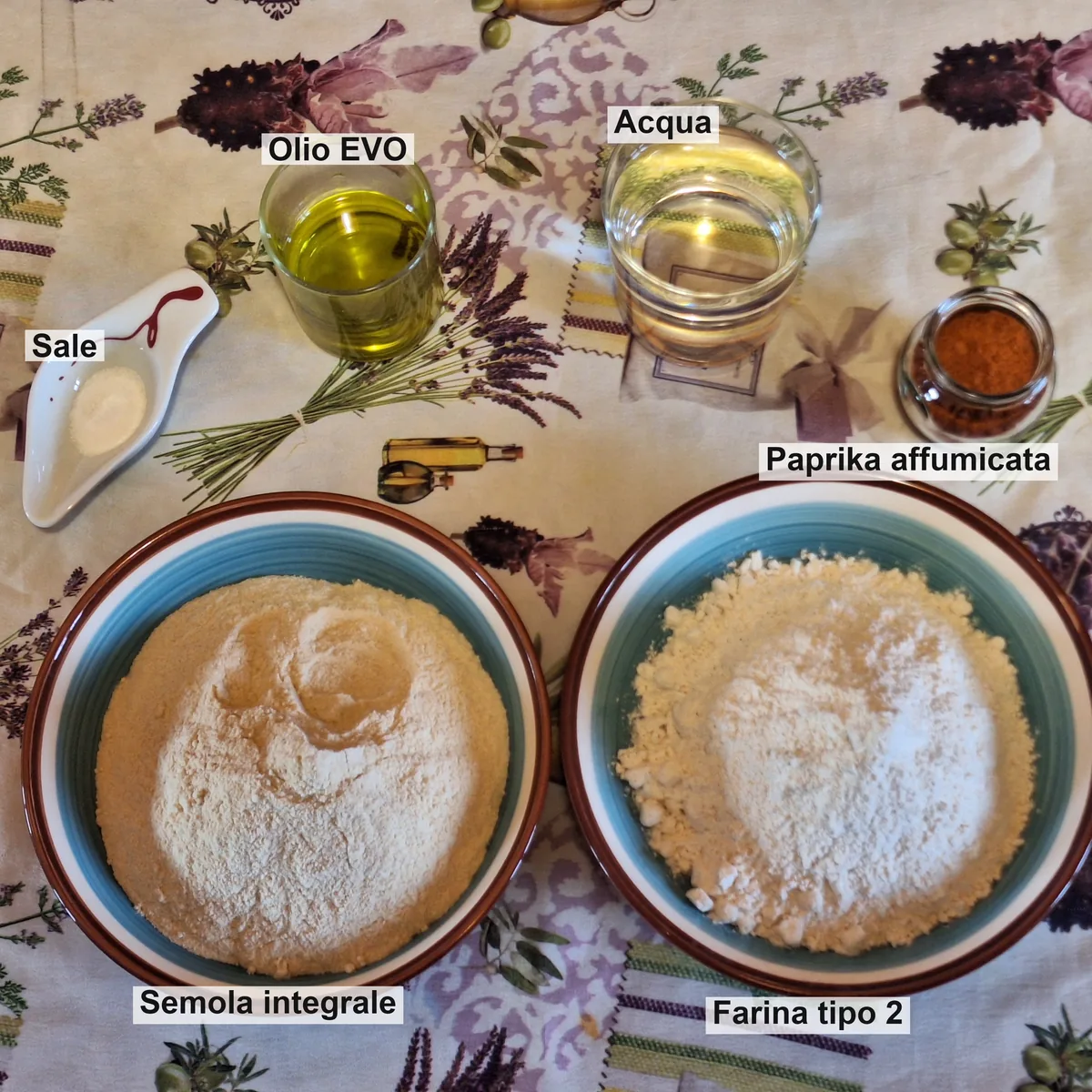
| Wholegrain durum wheat semolina (re-milled) | 150 g |
| Type 2 flour (semi-wholegrain, stone-milled) | 150 g |
| Water (room temperature) | 150 g |
| Olive oil | 60 g |
| Smoked paprika | 10 g |
| Fine salt | 6 g |
2. Method
- Optional: Bloom the paprika.
- Warm the 60 g olive oil over low heat until just lukewarm (it must not fry). Remove from heat, stir in the 10 g smoked paprika and stir for 30-60 seconds: the oil takes on colour and becomes fragrant. Let cool slightly. This step extracts the paprika's colour and aroma without burning it.
- Make the dough.
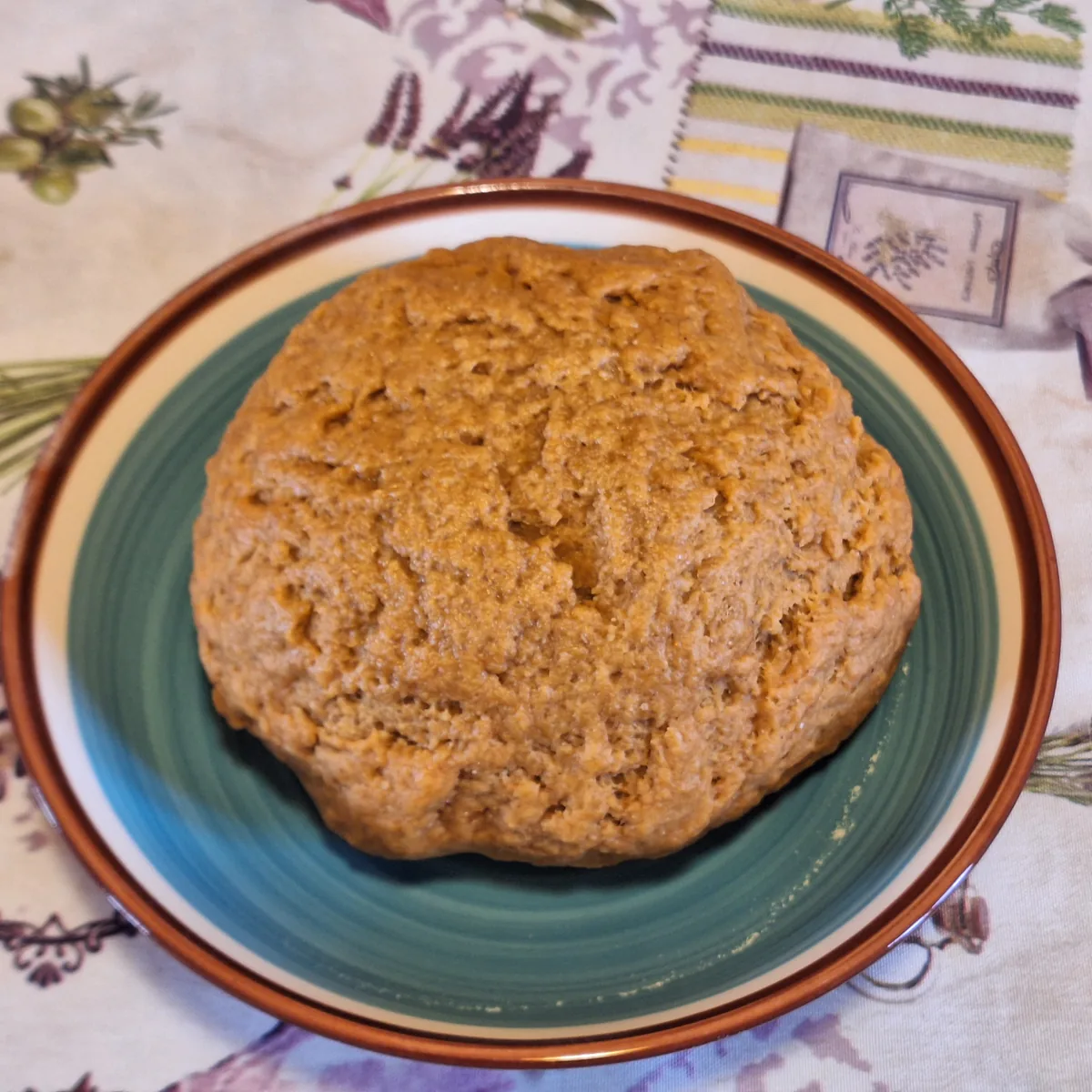
- In a bowl combine the 150 g wholegrain semolina and the 150 g type 2 flour with the 6 g fine salt (and the 10 g smoked paprika, if you skipped the blooming step). Add the 150 g water at room temperature and the 60 g olive oil (the paprika oil, if you bloomed it), a little at a time while kneading. The water amount is fixed (50% of the flour weight). Stop when the dough comes together into a firm, non-sticky ball. Pasta matta is a dry dough, it should not feel soft or wet. It's normal for it to stay rough, as in the photo; it relaxes after resting in the fridge.
- Cover in an airtight container and rest at least 30 minutes at room temperature (the longer the better; you can even refrigerate it for the next day): resting hydrates the semolina fully and makes the dough more elastic and easier to roll thin without tearing. If you really want to do a proper job, cover with cling film in direct contact to limit evaporation and the forming of a surface skin as much as possible. I consider it an optional step, and a waste of plastic too, because we then have to knead it again to make the balls, so any surface skin gets fixed by that re-kneading.
- Roll out.
- Divide the dough into as many pieces as you like: the smaller the portion, the more small savoury tarts you get, rather than a single tray-sized tart. I'd suggest no less than 80 g per piece (unless you're after ravioli). Roll each piece on a surface lightly dusted with semolina, as thin as possible (1-2 mm for a cracker-like result). Rolling in two stages, a first pass, a short rest, then a second, helps the semolina keep the sheet from tearing.
- The pasta matta is ready: you can now use it to make savoury parcels, such as the savoury parmesan and spinach parcels or the savoury sun-dried tomato and paprika parcels, or make crackers/schiacciata by carrying on with the recipe below. It is not an ideal use, though: if you want a schiacciata I recommend the vegetable schiacciata recipe.
- Bake.
- Preheat the oven to 200 °C static. Transfer the sheets to a lined baking tray, prick them all over with a fork (prevents bubbles and keeps them flat and crisp). A pinch of salt on top is optional.
- Bake 15-18 minutes until evenly golden with crisp edges. Thicker sheets need a few minutes more. Watch the last few minutes: being thin and oil-rich, it goes from golden to too dark quickly.
- Remove from the oven and let cool completely on a wire rack: pasta matta crisps up as it cools, not straight out of the oven.
3. Storage
Let cool completely on a wire rack before storing: if sealed while warm, steam softens it and it loses its crunch.
- Room temperature: 1-2 weeks in an airtight container. As a dry dough it keeps for a long time. If it softens with humidity, pop it back in the oven for 3-4 minutes at 160 °C and let it cool.
- Freezer: store the raw (uncooked) dough wrapped in cling film for up to 1 month; thaw in the fridge before rolling. Baked sheets do not freeze well, they would lose their crispness.
4. Technical Notes
- Why wholegrain re-milled semolina: it is the engine of the crispness. Durum wheat semolina has more retrograding starch (it forms firmer, more rigid gels when cool) and a "short, rigid" gluten that gives body and structure rather than elasticity. Its slightly coarser grind adds further bite. It is the classic base of crisp, crumbly products like rustic breadsticks and golden crusts.
- Why type 2 flour: it brings the flavour. Type 2 (semi-wholegrain soft wheat) keeps part of the bran and germ, so it gives the rustic, lightly toasted taste of wholegrain and an amber colour, while staying far more workable than full wholemeal flour. It is the counterweight to the semolina: flavour and handling, while the semolina brings crispness and body.
- Why 20% olive oil: it is more than usual (base pasta matta sits around 7-10%) and it is exactly what makes the dough crispier. The fat coats the flour particles before hydration and limits gluten development (the "shortening" effect): the dough becomes "short" and crumbly instead of elastic and chewy. And unlike butter (about 20% water), olive oil adds no water, so the dough stays drier and bakes crisper. Yes, I have tried several times to use less oil, for example 40 g instead of 60 g, and the result is still excellent.
- Why bloom the paprika: paprika's pigments (carotenoids) and aromas are fat-soluble, so they develop far better dissolved in warm oil than dry. Blooming in just-warm oil (30-60 s, never in a hot pan) gives a warm, enveloping background flavour with no risk of burning. Paprika burns and turns bitter above roughly 160-190 °C when dry: that is why it belongs inside the dough and not dusted on top, where it would scorch during baking.
- Thinner = crispier: thickness is the deciding factor. At 1-2 mm the result is cracker-like; rolled thicker it stays crisp outside with a slightly chewier core. Pricking it densely with a fork keeps the sheet flat and prevents bubbles.
5. Sources
- GialloZafferano: base pasta matta, "the thinner, the crispier"
- La Cucina Italiana: crumbly version with generous oil
- Sale&Pepe: resting and thin rolling to avoid tearing
- Foods 2022 (EVO oil in cookies): shortening effect, liquid oil stays crispier than solid fat
- Gels 2025, durum wheat derivatives: semolina shows greater retrogradation and firmer gels
- The Perfect Loaf: semolina and crisp crust
- Molini Spigadoro: type 2 flour for crackers and breadsticks with rustic flavour