🫓 Revzora with Type 2 Flour and Water Roux
Traditional flatbread from Campo Ligure made with semi-wholemeal flour and Water Roux for a soft, long-lasting crumb. Cornmeal dough.
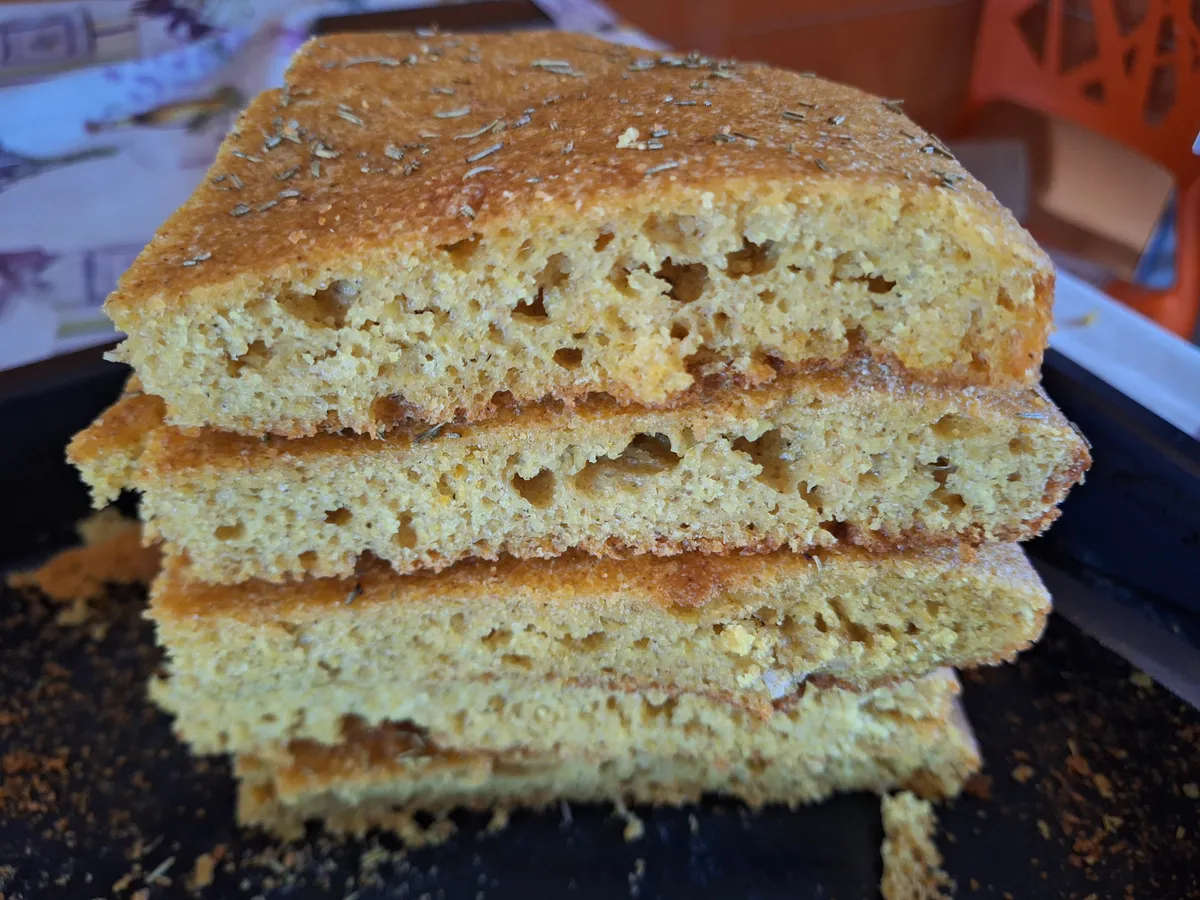
Revzora with Type 2 Flour and Water Roux
1. Ingredients
| Ingredient | Quantity |
|---|---|
| Water Roux | |
| Semi-wholemeal flour (type 2) | 70 g |
| Water | 350 ml |
| Dough | |
| Semi-wholemeal flour (type 2) | 606 g |
| Cornmeal (polenta flour) | 324 g |
| Warm water | 250 ml |
| Extra-virgin olive oil | 108 g |
| Instant dried yeast | 11 g |
| Salt | 13 g |
| Fresh rosemary | to taste |
| Coarse salt (for topping) | to taste |
2. Preparing the Water Roux
- In a small saucepan, whisk together 70 g of type 2 flour with 350 ml of water until smooth and lump-free.
- Place over low heat and cook, stirring constantly with a whisk. The mixture will thicken progressively.
- Once the temperature reaches 65 °C (the mixture will look like a thick, glossy paste with visible lines when the whisk passes through), remove from the heat.
- Transfer to a bowl, cover with cling film pressed directly onto the surface and allow to cool to room temperature before use.
3. Dough and first rise
- Dissolve the instant dried yeast in 250 ml of warm water (about 30 °C). Let it rest for 5 minutes.
- In a large bowl (or the bowl of a stand mixer), combine the remaining type 2 flour (606 g) and the cornmeal (324 g). Mix briefly.
- Pour in the yeast water and the cooled Water Roux. Knead until all ingredients are combined (5-6 minutes by hand, 3-4 minutes with dough hook on low speed).
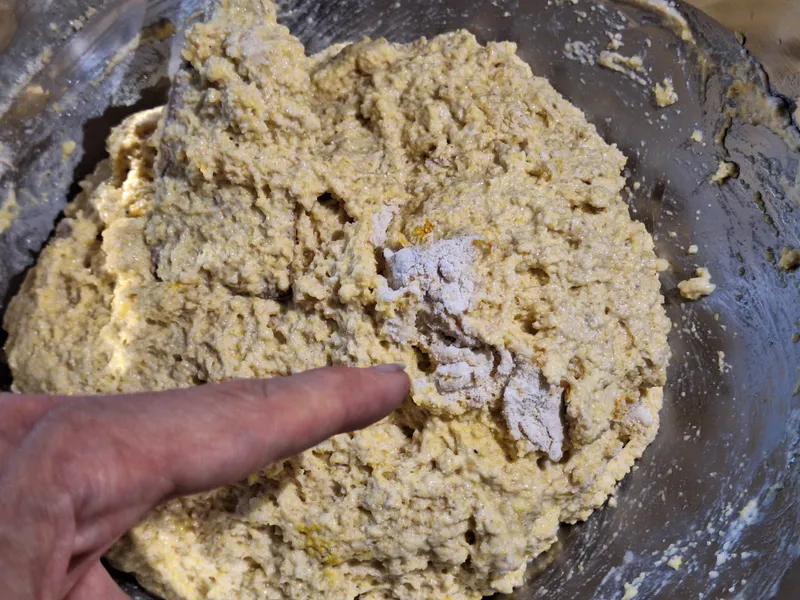
- Add the extra-virgin olive oil and salt. Continue kneading until the dough is smooth and uniform. It will be soft and slightly sticky: this is normal with the Water Roux method.
- (Optional) The original recipe does not call for this, but I prefer to do 2-3 sets of stretch and folds (20-30 minutes apart) before the first rise. After just the first set of folds, the dough already looks great, with a well-formed and visible gluten network.
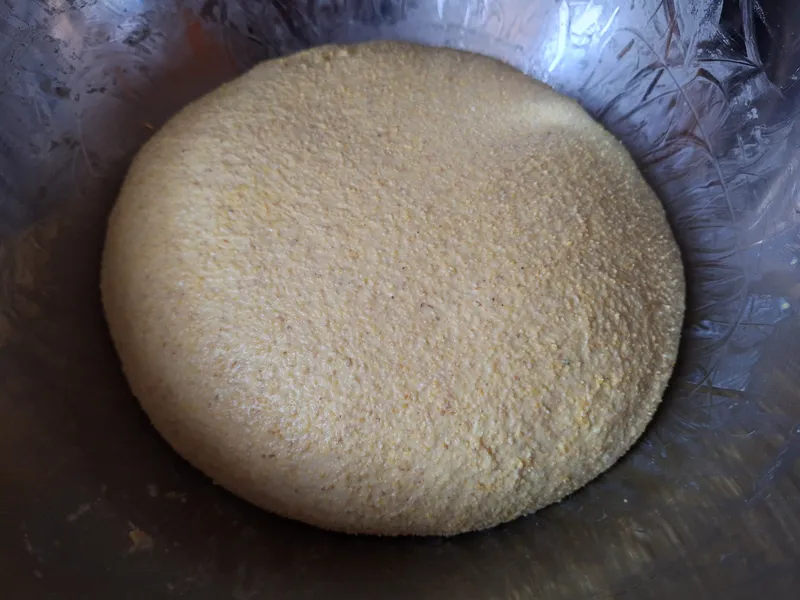
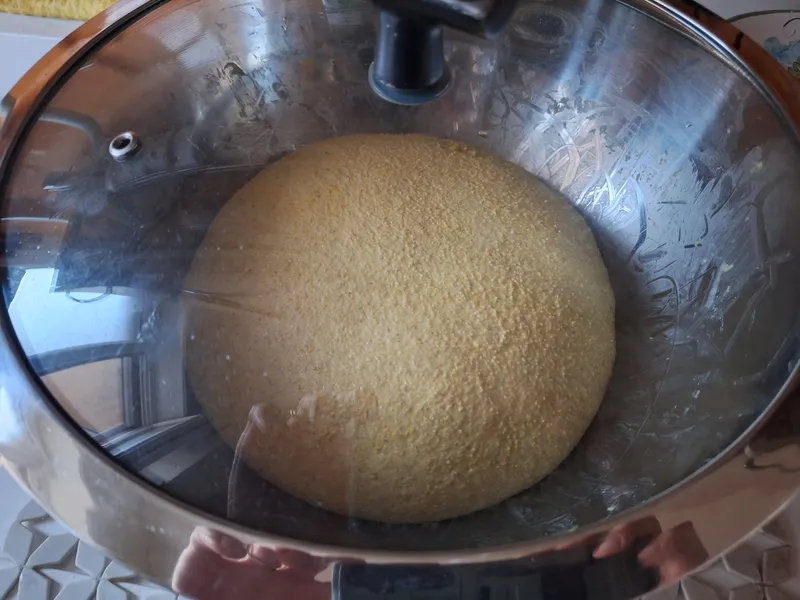
- First rise: cover the bowl with a damp cloth or cling film and let rise for 2.5-3 hours in a warm spot (oven turned off with the light on, about 26-28 °C). The dough should double in size.
4. Shaping and second rise
- Generously oil a baking tray of about 50x40 cm (or two trays of 40x30 cm) with extra-virgin olive oil.
- Turn the dough onto the tray and gently stretch it from underneath with oiled hands, without pressing down. If it springs back, let it rest for 5 minutes and try again.
- Second rise: cover and let rise on the tray for 30-40 minutes, away from draughts.
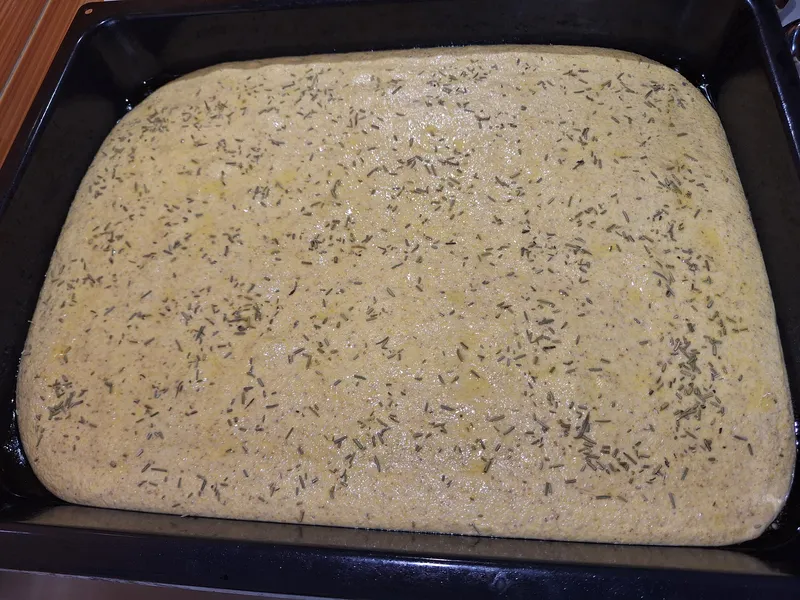
- If the dough has pulled back, gently stretch it again with your fingertips until it covers the entire tray. Shape a small rim around the edges.
5. Baking
- Preheat a static oven to 200 °C. Place a small tray of water on the bottom of the oven to create steam.
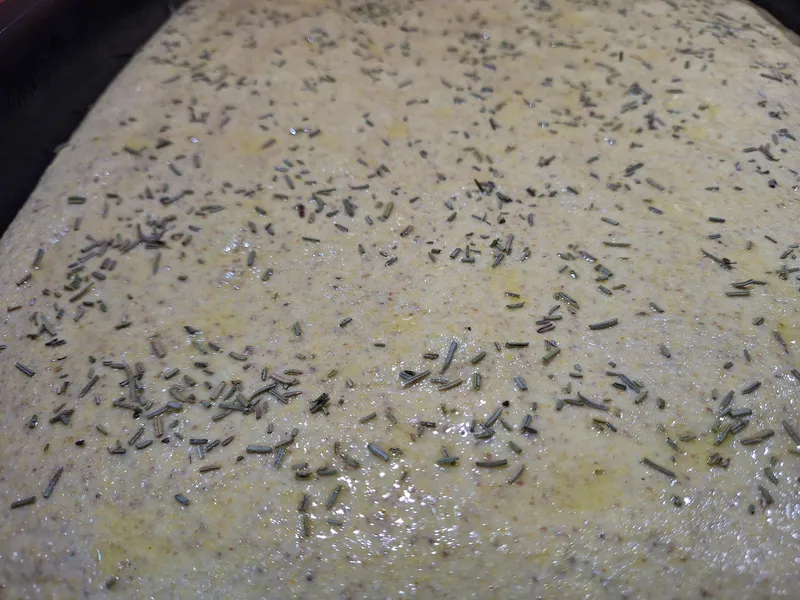
- Season the surface with coarse salt, fresh rosemary needles and a drizzle of extra-virgin olive oil.
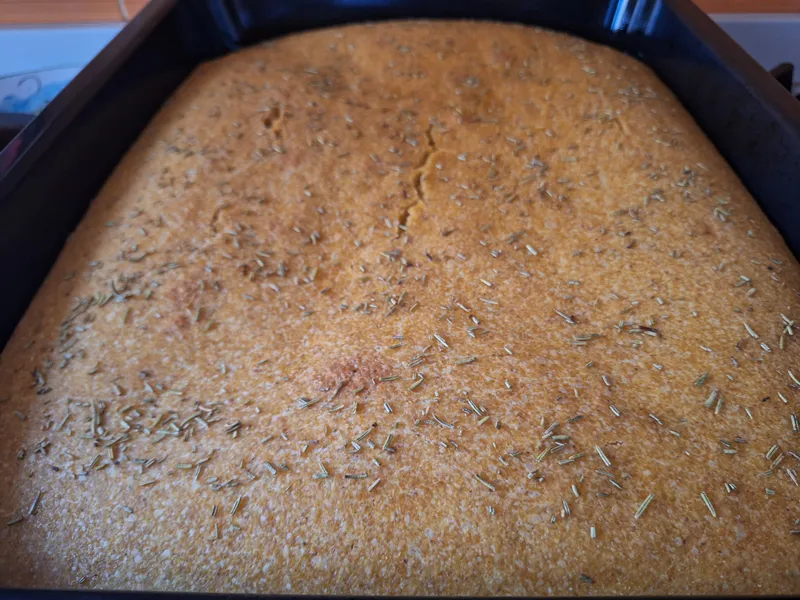
- Bake for 30-35 minutes until the top is golden and crisp.
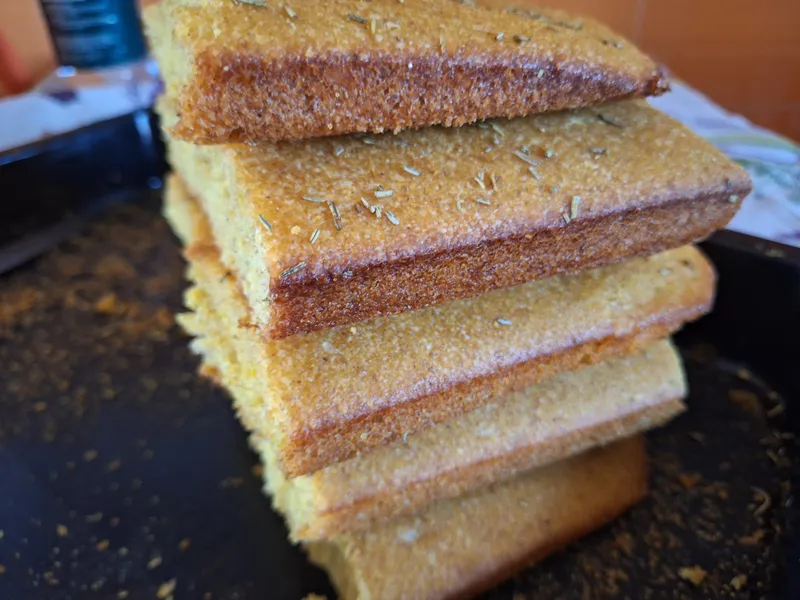
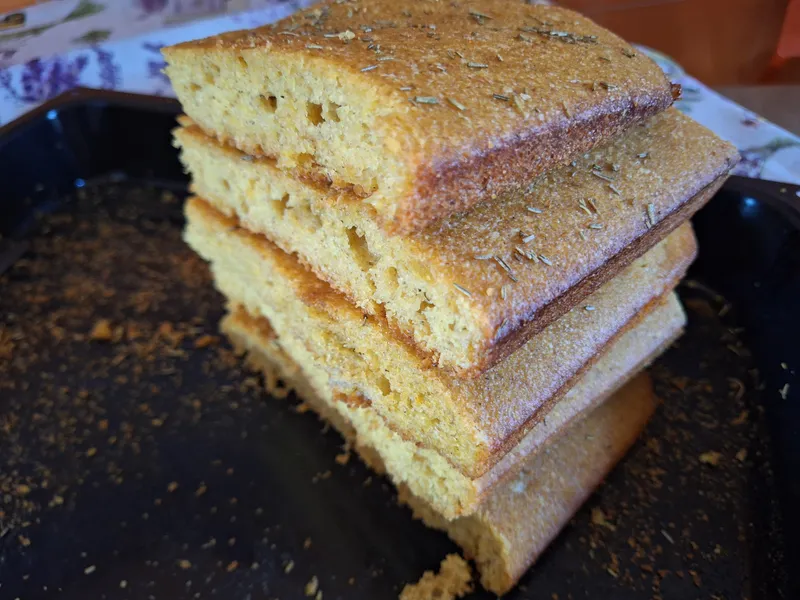
- Remove from the oven, let rest for 5 minutes on a wire rack, then cut into squares and serve.
6. Notes
Revzora (also written revzora) is a traditional flatbread from Campo Ligure, in the Ligurian hinterland. The dialect name derives from the verb revza (to scrape, to grate), referring to the crust that forms during baking. Traditionally made with wheat flour and cornmeal, this version uses type 2 flour (semi-wholemeal) which lends a more rustic, nutty character that is consistent with the original spirit of the recipe.
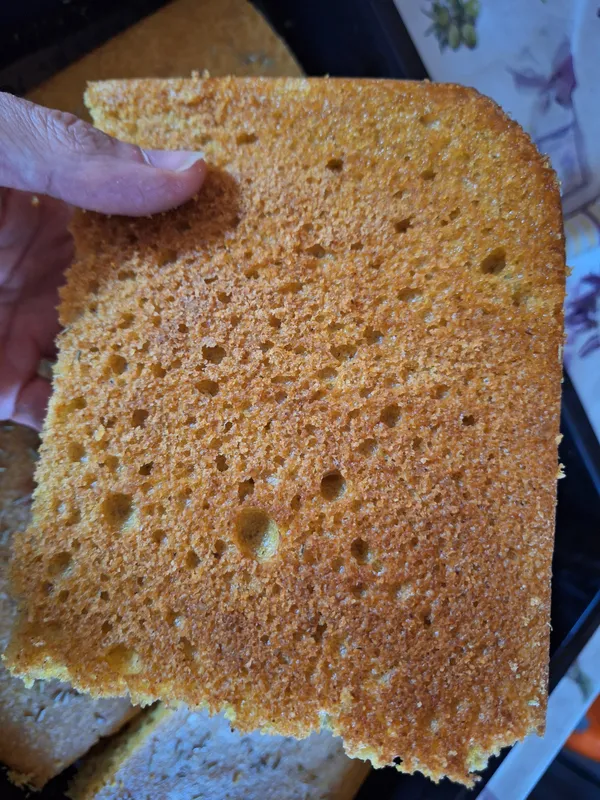
The Water Roux (Tangzhong) is a pre-cooking technique using flour and water in a 1:5 ratio. Starch gelatinisation at 65 °C allows the dough to retain more moisture, resulting in a significantly softer and longer-lasting focaccia compared to the traditional version, which is crumblier and more compact. The bread stays soft for 2-3 days.
The wheat-to-cornmeal ratio (approximately 2:1) maintains enough gluten structure for proper leavening while preserving the golden colour and distinctive flavour of the original Revzora.
7. Variations
Cornmeal percentage
Cornmeal contains no gluten. All the gluten structure (which traps the gases from leavening and gives structure to the crumb) comes exclusively from the wheat flour. Increasing the cornmeal proportion means reducing the dough's ability to rise and hold its shape during baking.
| % cornmeal | Cornmeal (per 1 kg) | Type 2 (per 1 kg) | Expected result |
|---|---|---|---|
| 10% | 100 g | 900 g | Barely perceptible corn flavour; behaves essentially like a wheat-only focaccia. |
| 20% | 200 g | 800 g | Slight corn flavour, slightly more golden colour. Still very solid structure. |
| 30–35% (base recipe) | 300–350 g | 650–700 g | Good balance; rises well, soft crumb with pronounced corn flavour. |
| 40% | 400 g | 600 g | More fragile dough, slightly denser crumb, strong corn flavour. |
| 45–50% | 450–500 g | 500–550 g | Maximum limit; very crumbly, reduced rise. |
| Over 50% | >500 g | <500 g | No longer a focaccia; more like cornbread or baked polenta. |
Possible compensations when increasing cornmeal: increase hydration (+5–10%), don't stretch too thin (minimum 1.5 cm thickness), knead for less time. The Water Roux helps a lot: it retains moisture and adds cohesion, allowing you to push up to 40–45%.
The recommended range is around 30%. If you want to experiment you can try 40%, though I haven't tested that myself.
Oil percentage
Reference values (% on total flour)
| Product | % oil/fat | Source |
|---|---|---|
| Common bread | 0% | Baking standard |
| Classic focaccia | 4–6% | Baking standard |
| Classic Genovese focaccia | 8–12% | Ligurian tradition; oil in dough + on surface |
| "Rich" focaccia (ratio 5:3:1 = Flour:Water:Oil) | 20% | 100 ml oil per 500 g flour, 300 ml water |
The original revzöra recipe calls for about 110g of oil per kilo of flour, i.e. roughly 11% oil. This places it in the Genovese focaccia range, consistent with the Ligurian character of the recipe.
I tried using 40 ml of extra-virgin olive oil per 1 kg of flour (4%), plus oil on the bottom of the pan and on the surface before baking. Beyond the health aspects of this experiment, the curiosity was to see the final product with an oil amount in line with a classic focaccia rather than a "Genovese" one.
Well, to my personal taste it turned out delicious, with a crispy bottom and soft interior. I even brought it in two small trays to a shared lunch, with several children, teenagers and adults and... there were no leftovers.
This led me to wonder: what is the actual function of oil in the dough? Here is what I have found so far.
Mechanisms of oil in the dough
a) Gluten coating (shortening effect)
Oil coats the gluten proteins (glutenin and gliadin), preventing the formation of a long, elastic gluten network. The result is a structure with shorter chains (hence the term shortening), producing a more tender and less chewy crumb.
b) Staling retardation
Oil slows down amylopectin retrogradation, i.e. it slows the staling process in baked goods. Lipids form complexes with amylose, inhibiting starch recrystallisation and slowing the redistribution of water from the gluten network to the starch.
By the way, there is a whole world behind this effect: did you know that consuming pasta, rice, legumes, potatoes and other starchy foods that have been cooked and then cooled helps maintain a lower glycaemic index and feeds the good bacteria in your gut?
c) Volume and crumb structure
Oil (up to 20%) increases the specific volume of bread and the pore density (smaller and more uniform air cells), especially at high hydrations. At just 3%, an increase in volume of about 11% is observed compared to a fat-free dough.
d) Effect on proofing
High oil percentages (>10%) slow down proofing because:
- The fat coats yeast cells, reducing their access to fermentable substrates.
- The weaker gluten network retains less CO₂ gas.
For doughs with over 10% fat, it is recommended to add the fat after the gluten network has formed.
e) The timing of oil addition is as important as the quantity. When oil touches dry flour, it coats it and prevents hydration, rendering that portion of flour unable to produce gluten. This is the basis of the delayed oil method: oil should not be added until the flour has been hydrated (at least 2–3 minutes from the start of mixing).
Implication for the Revzöra: since type 2 flour develops gluten more slowly and cornmeal develops none at all, it is important to add the oil only after the wheat flour has hydrated (at least 2–3 minutes of mixing, or after a brief autolyse). This maximises the available gluten development before "shortening" it with the oil.
Surface oil vs. oil in the dough (Genovese technique)
In traditional Genovese focaccia, oil is also (or mainly) distributed on the surface, where it serves different functions:
- Creates a barrier against moisture loss during baking
- Promotes the Maillard reaction (golden, crispy crust)
- The dimples (holes) trap pools of oil that penetrate the upper crumb
On average, about 40–50 ml of oil is used per 30×40 cm tray on the surface.
8. References
Scientific publications
- Mancebo CM, Martínez MM, Merino C, de la Hera E, Gómez M. Effect of oil and shortening in rice bread quality: Relationship between dough rheology and quality characteristics. J Texture Studies. 2017; PMID: 28449185. DOI: 10.1111/jtxs.12270
- Kan J et al. Effects of oil and heating on the physicochemical and microstructural properties of gluten-starch dough. Food Chemistry. 2024; PMID: 37832423
- Gray JA, BeMiller JN. Bread Staling: Molecular Basis and Control. Comprehensive Reviews in Food Science and Food Safety. 2003; PMID: 33451240. DOI: 10.1111/j.1541-4337.2003.tb00011.x
- K-State University. Bread Staling: Effects of Fats, Surfactants, Storage Time and Storage Temperature. (Thesis)
- Application of Oat Oil in Breadbaking. ResearchGate, 2001.
Professional / technical sources
- Tom Lehmann (former director, American Institute of Baking). Dough Doctor: The Long and Short of It. Pizza Today, March 2015. Link
- Heckers & Ceresota (Ardent Mills). Delayed Oil Dough Assembly Method. Link
- Institute of Food Science and Technology (IFST), UK. Fats and Oils — Shortening. Link
- Maurizio Leo (The Perfect Loaf) / Clara. The Science of Fat: How It Affects Bread Proofing. bakefor.me, 2026. Link
- SoVeLab. Come gestire l'olio in superficie per una focaccia soffice tipo genovese con tecnica tradizionale. 2026. Link