🥣 Lentil Soup with Aubergine and Tomato
Lentil soup with a soffritto, grated aubergine and tomato, 100% plant-based, in one pot. Rustic or creamy as you like.
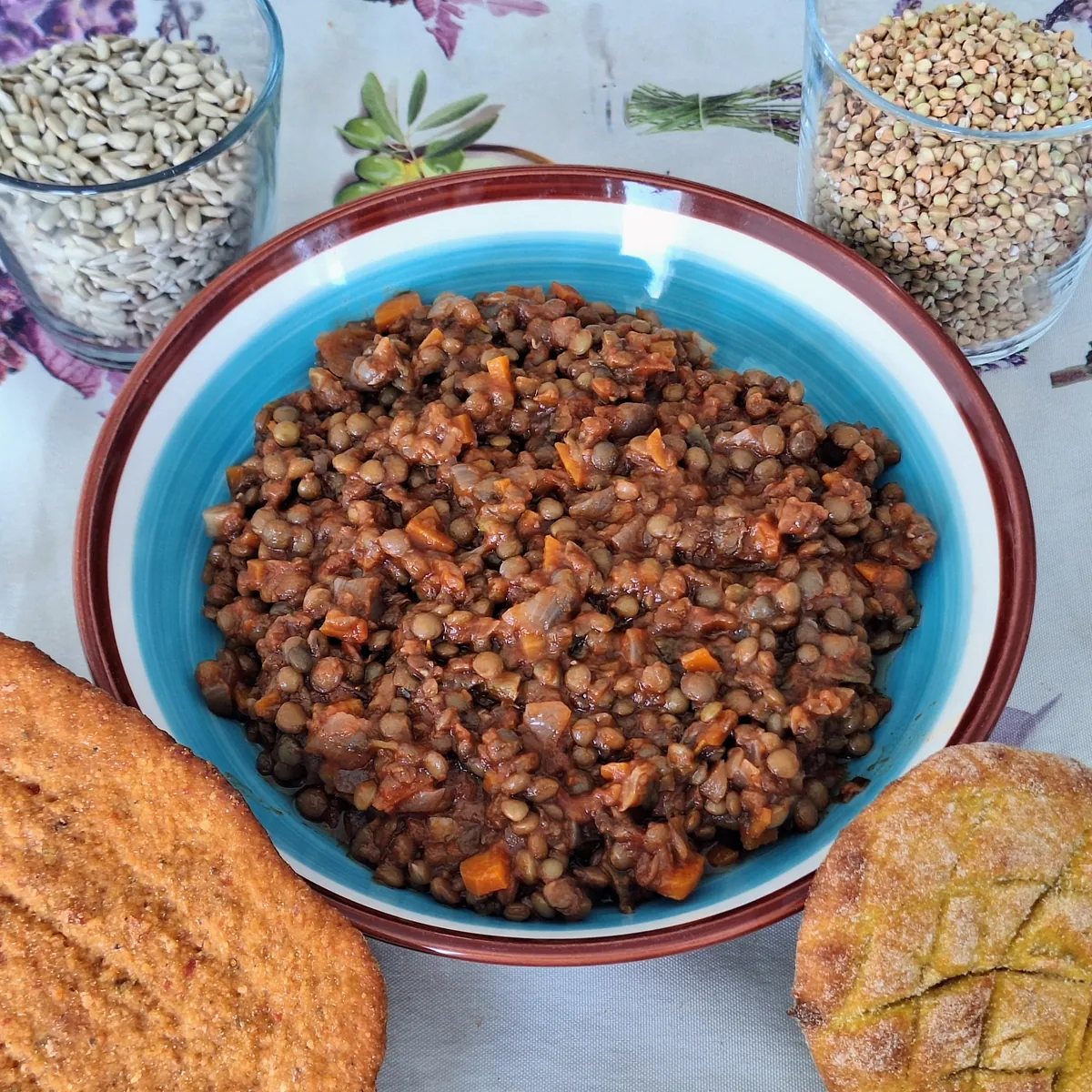
Lentil Soup with Aubergine and Tomato
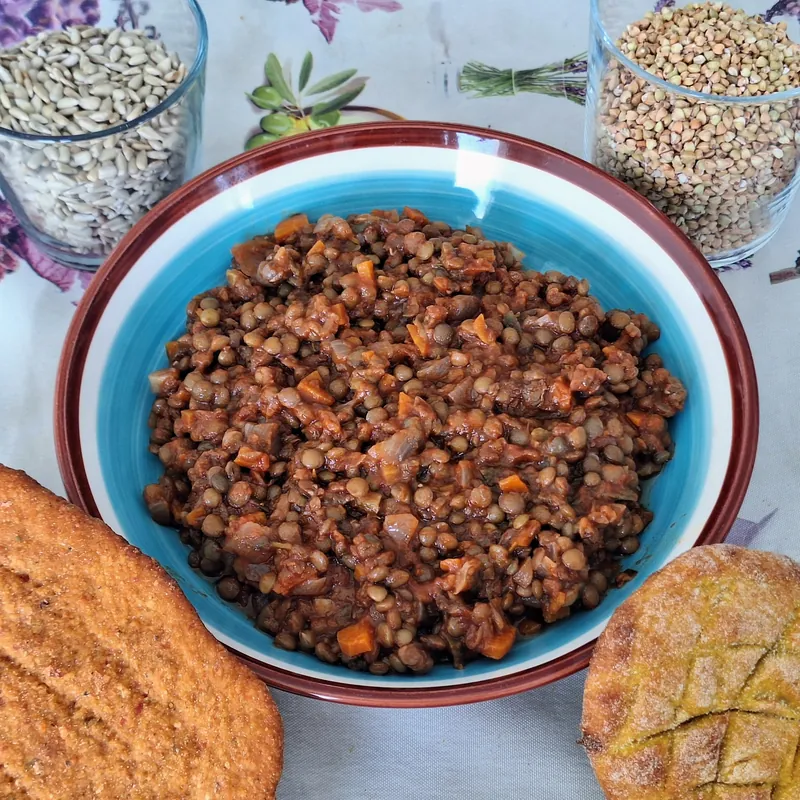
A rustic, complete lentil soup, 100% plant-based and made in one pot: a soffritto of onion, carrot and celery, grated aubergine that melts into the base, a double hit of tomato (paste and passata) and lentils cooked gently. Blending a small part at the end lets you decide how creamy to make it, while still leaving lentils and vegetables to chew on. It is a dish to make unhurried and then let rest: the longer it waits, the more the flavours come together. It goes well with a rustic focaccina or a vegetable schiacciata.
Set the amount of ingredients you want to use with one of the two options below:
Quantity
Dried lentils (green, brown or black) (min g, max g):
g
1. Ingredients
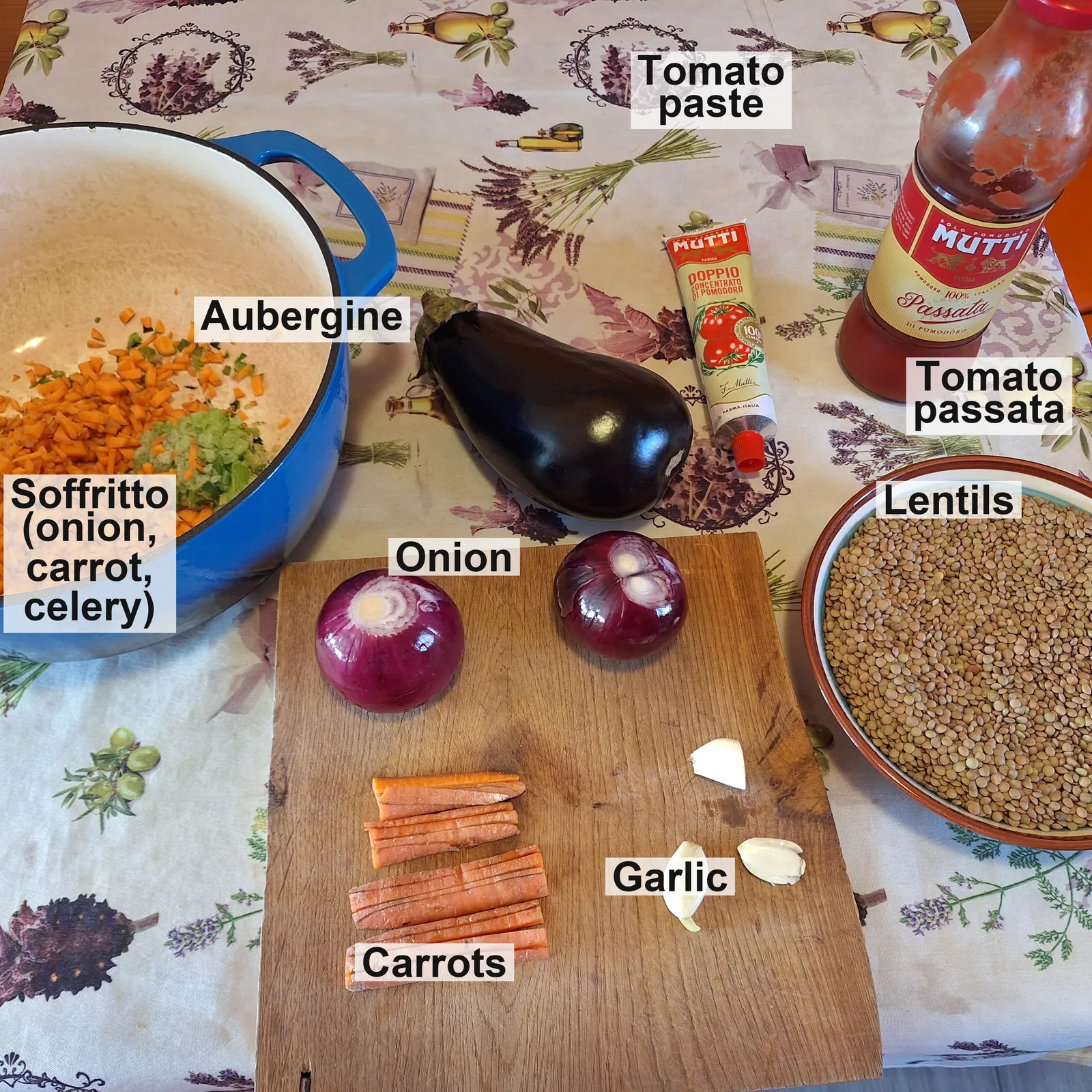
| Ingredient | Quantity |
|---|---|
| Dried lentils (green, brown or black) | 400 g |
| Water for cooking | 1 L |
| Onion, finely diced | 150 g |
| Carrots, finely diced | 120 g |
| Celery, finely diced | 80 g |
| Garlic, finely chopped | 12 g |
| Extra-virgin olive oil | 30 g |
| Aubergine, coarsely grated | 250 g |
| Tomato paste | 30 g |
| Tomato passata | 400 g |
| Bay leaves, removed at the end of cooking | 1-2 leaves |
| Thyme and/or rosemary, optional | to taste |
| Salt | to adjust |
| Black pepper | to taste |
| Lemon juice (raw on the plate) | a dash |
2. Method
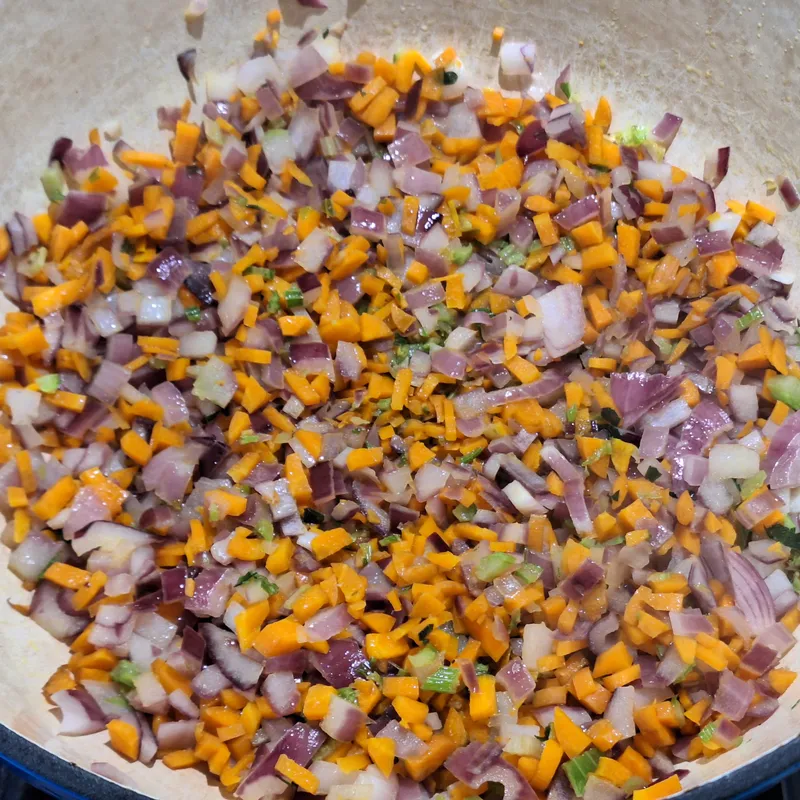
- In a large, heavy-bottomed pot heat a drizzle of 30 g extra-virgin olive oil. Add the soffritto of 150 g onion, 120 g carrots and 80 g celery, finely diced, and sauté for a few minutes, until the onion is translucent.
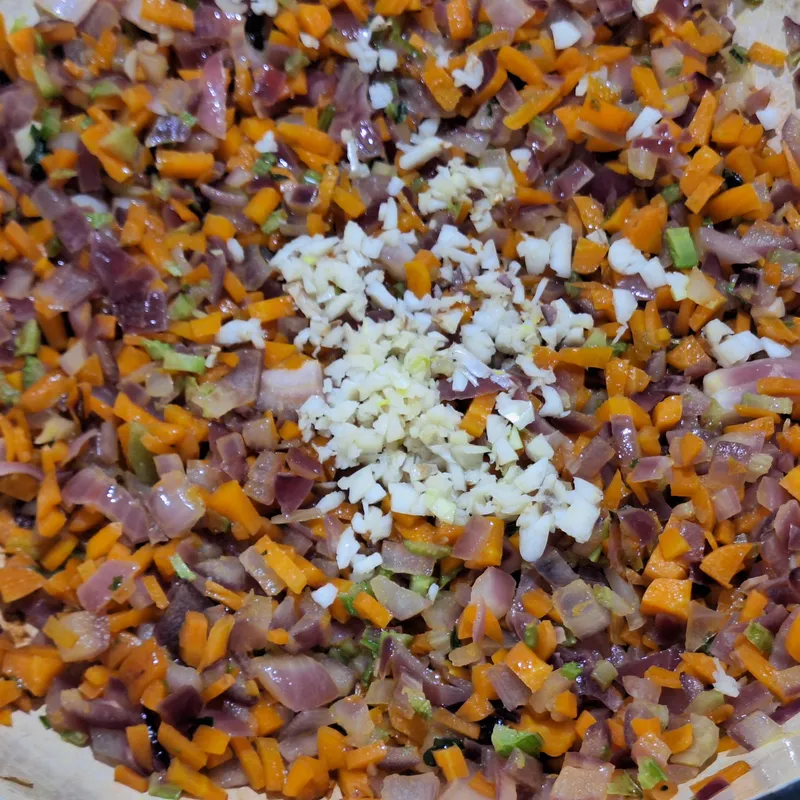
- Add the 12 g garlic, finely chopped, stir and sauté for 1 minute.
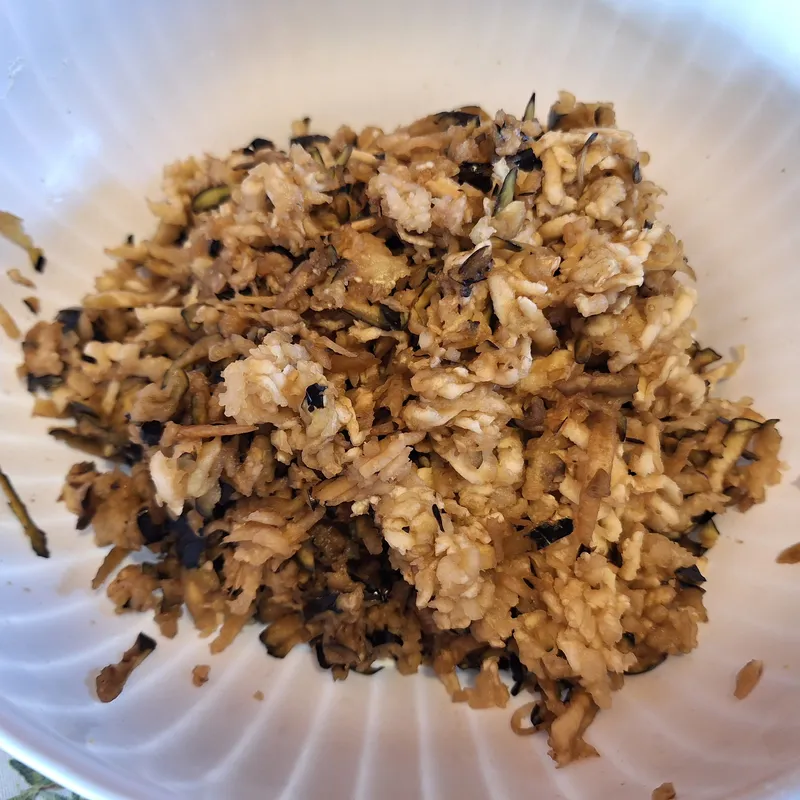
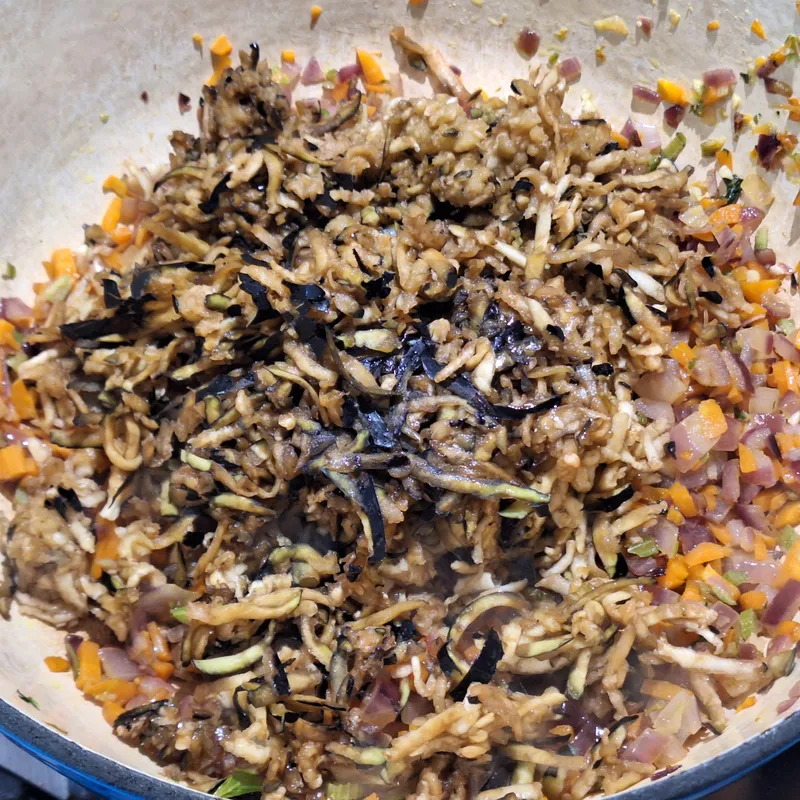
- Add the 250 g aubergine, coarsely grated, stir to combine and let it soften with the soffritto for a couple of minutes.
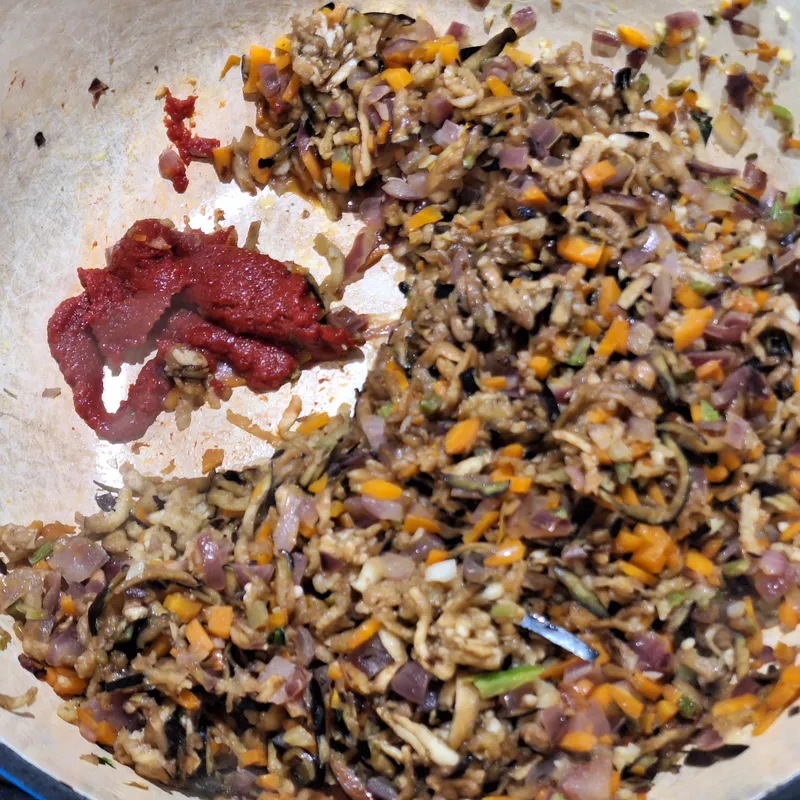
- Add the 30 g tomato paste and let it blend with the rest of the soffritto, a minute or so.
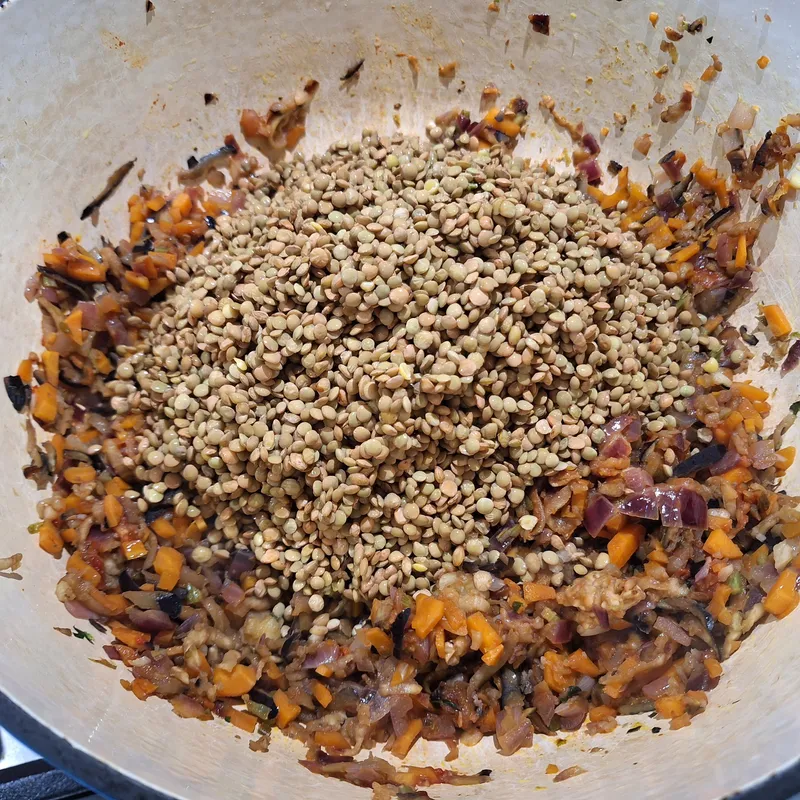
- Add the 400 g lentils and stir.
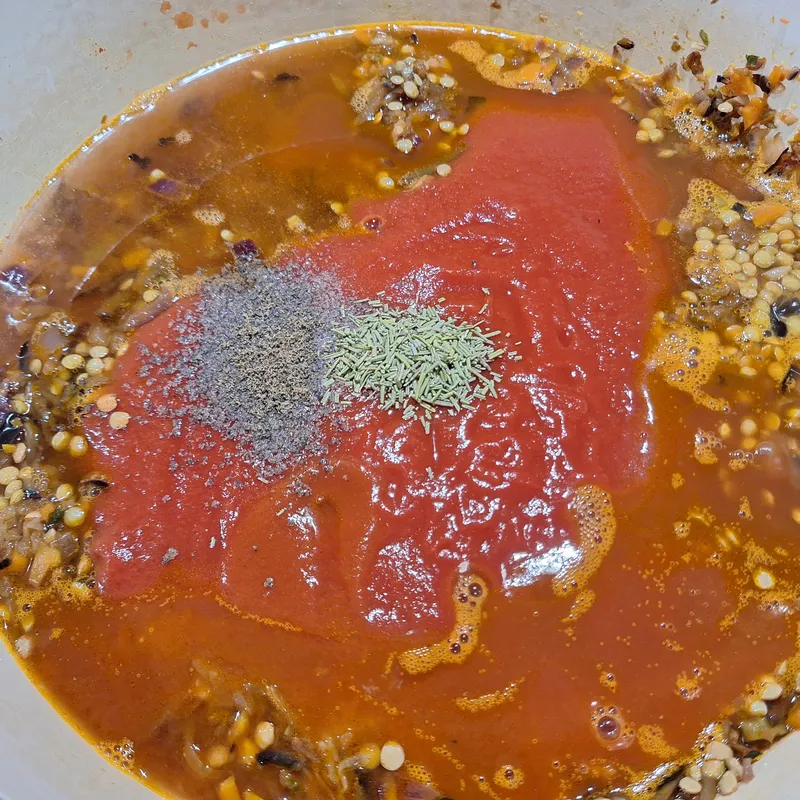
- Add the 400 g tomato passata and 1 L water (use some of the water to rinse out the passata bottle and recover all the tomato).
- Add the aromatics too: the bay leaves and, if using, the thyme and/or rosemary. Grind in the black pepper.
- Stir and, as soon as it starts to simmer, cover with a lid and turn the heat to the lowest setting.
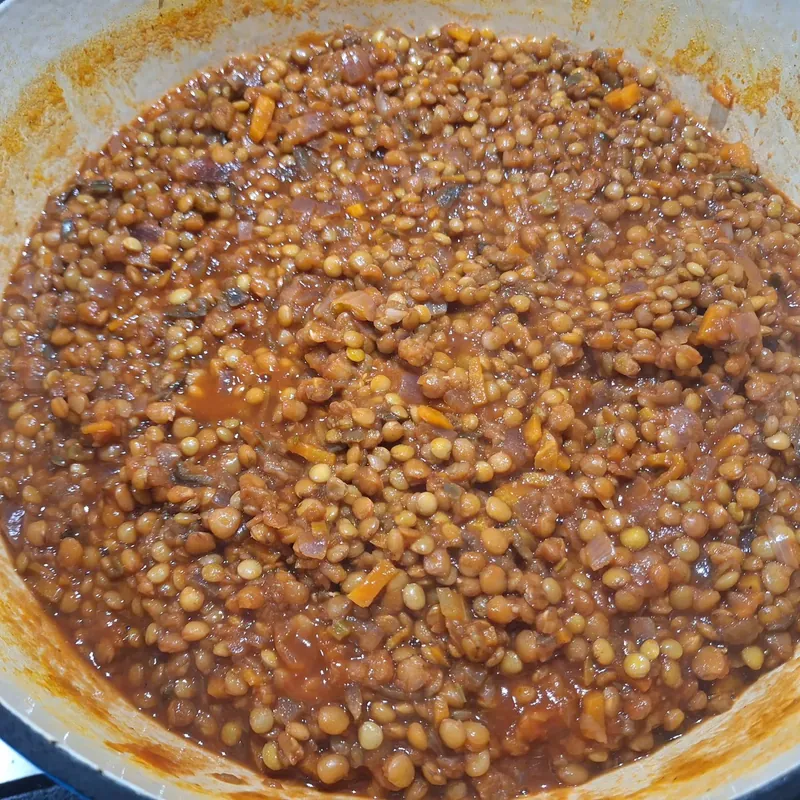
- Simmer for about 30 minutes. Then blend part of the soup (1/4 or less) with a stick blender at the lowest speed. Take care not to blend too much: the more you blend, the more you get a velvety cream rather than a soup with lentils and vegetables to chew on. If the soup is too dry, add a little water.
- Stir and cook for another 10-15 minutes, until the lentils are completely done; it usually takes 30-40 minutes, depending on the type and size of the lentils: check what the packet says, but also judge by eye and by tasting. Adjust the salt towards the end of cooking (see technical note) and remove the bay leaves and, if used, the herb sprigs. If instead you used dried chopped herbs, as I did in the photo, they obviously stay in the pot.
- Let it rest, with the lid on but leaving a gap, at least 30 minutes (the longer you wait, the better) to let the flavours come together. Serve with a dash of raw lemon juice just before plating.
3. Storage
The lemon juice should always be added at the moment, on the plate, not in the pot to be stored.
- Room temperature: not advised beyond 2 hours. A cooked legume soup is an ideal medium for bacteria: at room temperature the risk of growth rises quickly, so cool and store within a couple of hours.
- Refrigerator: 3-4 days in an airtight container, once cooled. In fact it is often better the next day, because the flavours have kept coming together. Reheat in a pot, loosening with a little hot water if you want it brothier, or you can reheat it straight in the bowl in the microwave (for just a few people it is the quickest method).
- Freezer: it freezes well for up to 3 months, already portioned. Thaw in the fridge and reheat in a pot, adjusting the consistency with a little hot water. Add the fresh lemon when serving.
4. Technical Notes
- The best moment for salt. What really firms up lentils is not salt but acidity: tomato, paste, vinegar and lemon slow the softening of the skins. In this soup tomato and passata go in early, so the cooking environment is already acidic from the start: that, not the salt, is why the lentils may take a few minutes longer. Salt in itself does not harden legumes: sodium ions replace calcium and magnesium in the pectin of the skins, if anything weakening it slightly. So you can salt at the start of the simmer, to season the legume deeply during cooking, or at the end, when the soup has reduced and concentrated and you adjust to the final result.
- How much water, and how to adjust the consistency. The starting ratio is about 2.5 times the weight of the lentils: with 400 g of lentils, 1 L of water. If you want a brothier soup you can add more water, but it is best to go carefully, because you can always add more, whereas you cannot take it out: you can only let it evaporate by cooking over high heat, but that lengthens the cooking and risks completely falling-apart lentils, changing the final result. Better to start with less and loosen if needed.
- Why legumes cause bloating, and the bay leaf. The bloating associated with legumes comes from certain oligosaccharides (raffinose and stachyose): sugars the human gut cannot break down, lacking the necessary enzymes, which are therefore fermented by the gut flora. Adding one or two bay leaves while cooking legumes is a widespread traditional practice precisely to make them more digestible; the bay is removed at the end of cooking. The digestive effect of bay is an established kitchen practice, not a proven biochemical mechanism in the way the oligosaccharide origin of the bloating is.
- Blending part for a creamy body. Blending a fraction of the soup (1/4 or less) releases the lentils' starch, which thickens the liquid and gives a creamy body to the soup. The more you blend, the more the result moves towards a velouté and the fewer lentils and vegetables are left to chew on.
- Resting with a gap. Letting the soup rest covered but with a gap, at least 30 minutes, lets the flavours come together; the gap keeps condensation from falling back into the pot and diluting the soup.
- If it turns out too acidic. At the end of cooking you can taste: if the soup is a little too acidic, it is softened with a dash of soy milk, or of cow's milk if you like, which in that case makes the recipe vegetarian.
5. Variants
- Type of lentil. Green, brown or black are ideal because they hold their shape in cooking without falling apart. Red and yellow split lentils are not suited to this recipe: after about 15 minutes they break down completely into a cream.
- Aubergine replaced with mushrooms (1:1). The aubergine can be replaced 1:1 with mushrooms, coarsely grated or finely chopped. Mushrooms work very well in this recipe, giving an excellent texture and adding further umami to the soup.
- Blooming the aromatics (optional step). Dried herbs and spices develop their fat-soluble aromatic compounds when briefly heated in the oil before adding the liquids. So, if you like, you can bloom the dried aromatics in the soffritto for a few moments, before the tomato.
- Spicier version. For a spicier profile you can add cumin, smoked paprika, coriander and turmeric. For an even more intense version you can add chilli or red curry (kashmiri red chilli powder) and garam masala: with these spices, however, the dish moves noticeably towards an Indian dhal, changing the final result almost entirely. I have tried it, and I liked it a lot, but it is another recipe: I will publish it as soon as I can.
6. Sources
- Serious Eats: blending part of the soup for dairy-free creaminess, use of aromatics
- America's Test Kitchen: acid keeps legume cell walls intact and slows softening
- Jessica Gavin: cooking times and method for dried lentils by type
- USDA FoodData Central: lentil composition and oligosaccharide content (raffinose, stachyose)