🥣 Mexican Black Bean, Corn and Paprika Soup
Mexican black bean and corn soup, reimagined Mediterranean-style, 100% plant-based and simplified into a one-pot dish.
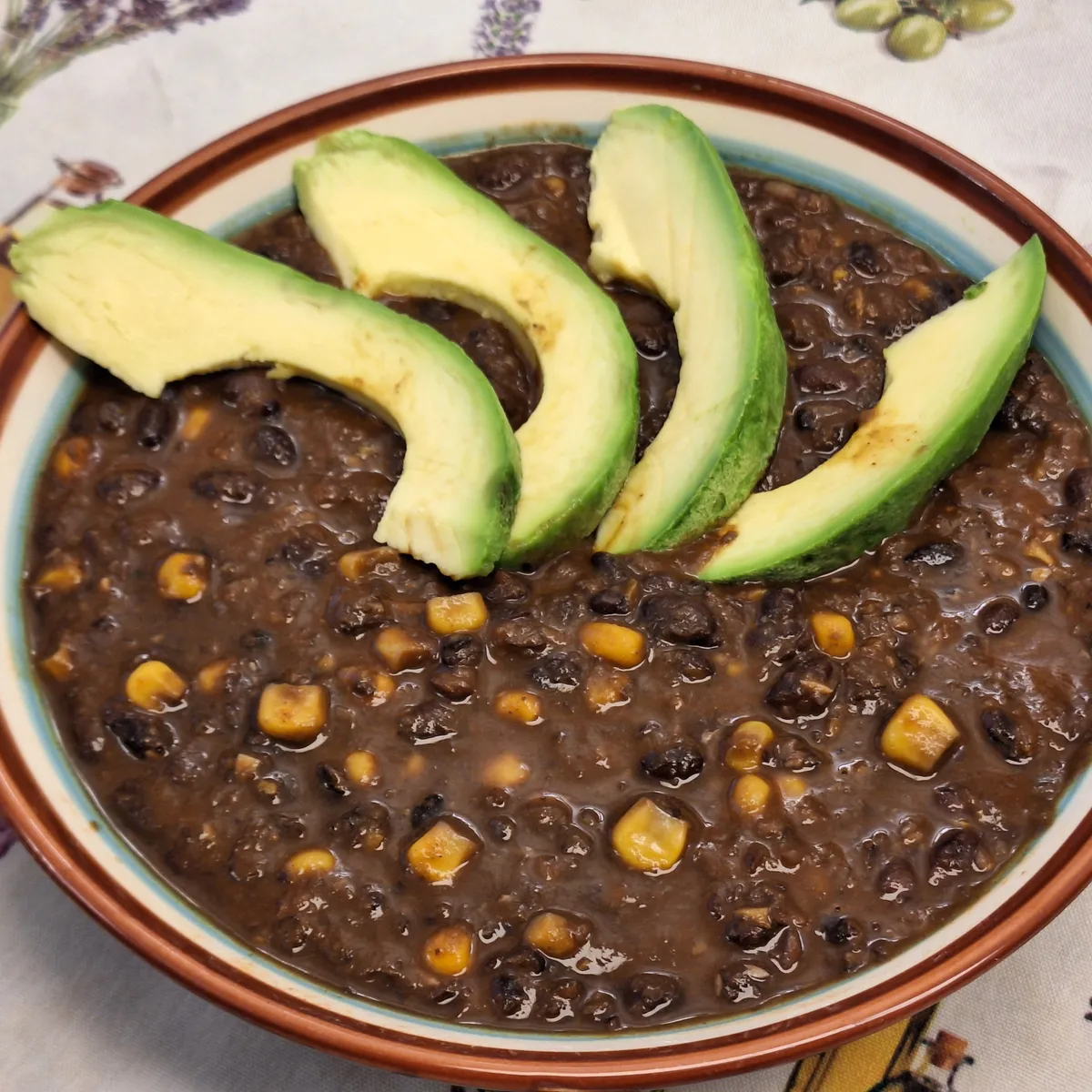
Mexican Black Bean, Corn and Paprika Soup
Black bean and corn soup is a classic Mexican soup, which calls for pre-cooking the black beans and a few ingredients that are hard to find outside Central America. This is a simplified version, 100% plant-based, made in a single pot, with only the recipe's core ingredients. The chilli is listed as optional, meaning you add more or less to taste, or leave it out. Leaving it out does change the final result noticeably: you get a more delicate soup, in which the creamy notes of the beans and the sweetness of the corn come through more. The avocado is added sliced or diced, raw, straight onto the plate: it brings creaminess without altering the flavour. In this Mediterranean version the avocado, too, can be left out. What I do recommend is eating the soup with a rustic focaccina or the multicolour cloud focaccine or, for an extra flavour boost, with a vegetable schiacciata.
1. Ingredients
| Ingredient | Quantity |
|---|---|
| Dried black beans | 300 g |
| Water for cooking | 1.2 L |
| Onion (white, yellow or red), chopped | 100 g |
| Garlic, chopped | 15 g |
| Extra-virgin olive oil | 25 g |
| Ground cumin, dry-toasted | 4 g |
| Smoked paprika | 5 g |
| Dried oregano | 1 g |
| Tomato passata (halfway through cooking) | 200 g |
| Corn kernels, frozen or fresh (at the end of cooking) | 200 g |
| Salt (only at the end of cooking) | 6 g, to adjust |
| Lime juice (at the end of cooking) | 22 g |
| Fresh parsley, chopped (to garnish) | 1 bunch |
| Ripe avocado, sliced, raw on the plate | 1 |
| Chilli, optional (chipotle in adobo, fresh or dried flakes) | to taste |
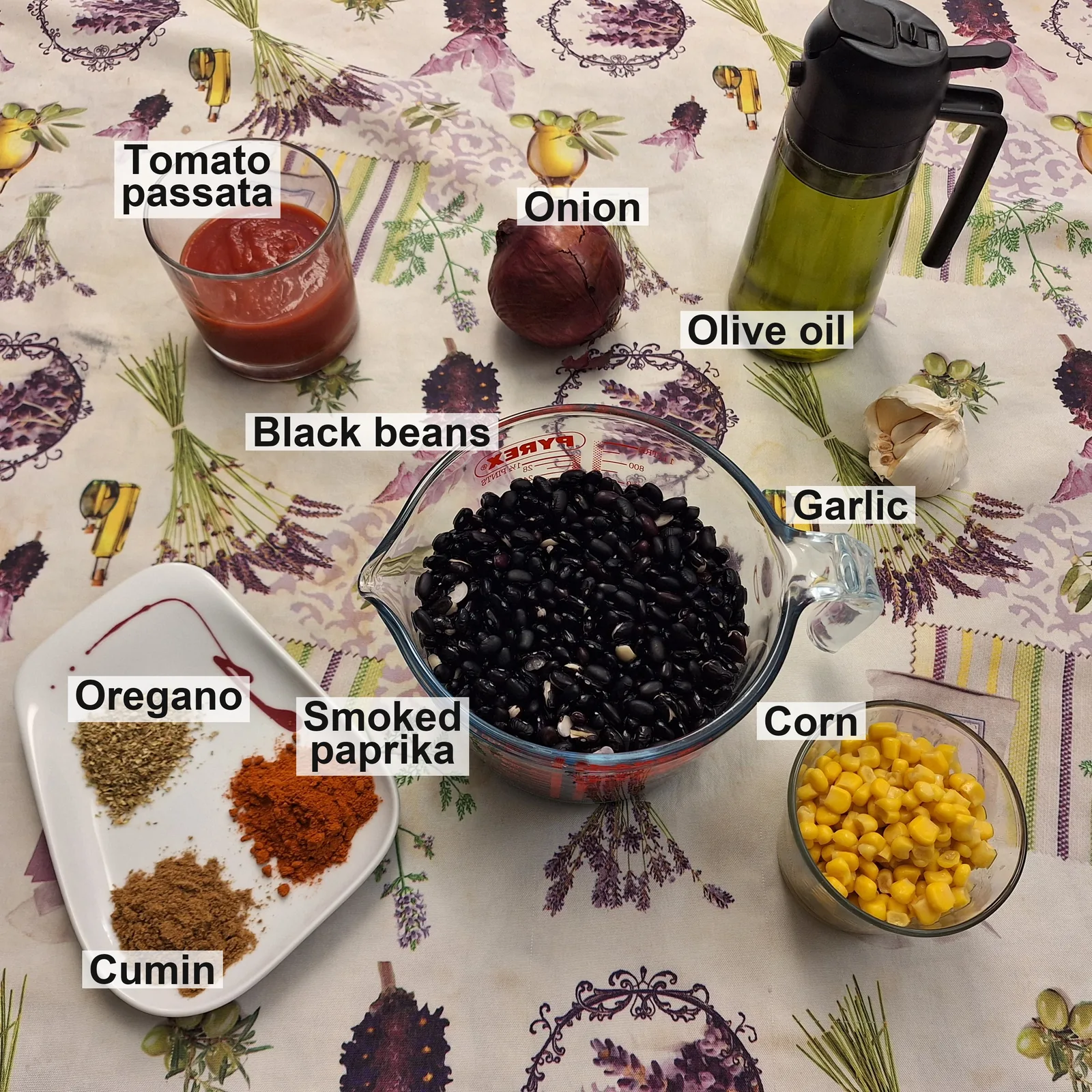
2. Method
- Soaking (the night before): put the 300 g black beans in plenty of cold water, about 3 times their volume, and leave overnight. The next day drain and rinse. Change the beans' water several times, until it runs reasonably clear.
- Base: in a large, heavy-bottomed pot heat the 25 g extra-virgin olive oil. Add the 100 g onion and 15 g garlic, chopped, and sauté for 6-8 minutes, until the onion is soft.
- Add the 4 g cumin, the 1 g oregano and the 5 g smoked paprika (and the chilli, if using) and cook for 1 minute to release the aromas. Take care not to burn the spices: if it is too dry, add a splash of water to bring it together.
- Tip the drained 300 g beans onto the base, stir to coat, then add 1.2 L water. No salt, no tomato, no lime yet. Bring to the boil, lower to medium-low heat and cook half-covered. Top up with a little hot water if it dries out too much, though with the lid on this should not happen.
- Tomato halfway through: after about 1 hour, when the beans start to give but are not fully tender, add the 200 g tomato passata. Continue until soft, another 20-40 minutes depending on the beans.
- Light partial blend:
- with a stick blender, blend about 1/4 or less of the soup right in the pot;
- with a jug blender, scoop out about 1/4 of the soup (beans and liquid), blend it and return it to the pot.
- Corn and finishing: add the 200 g corn and cook for 5 minutes. Now salt (6-7 g salt, taste) and add the 20-25 g lime juice. Adjust salt and acidity. Note that tomato and lime both add acidity: if you used an already-acidic passata, you can add less lime. Taste and adjust.
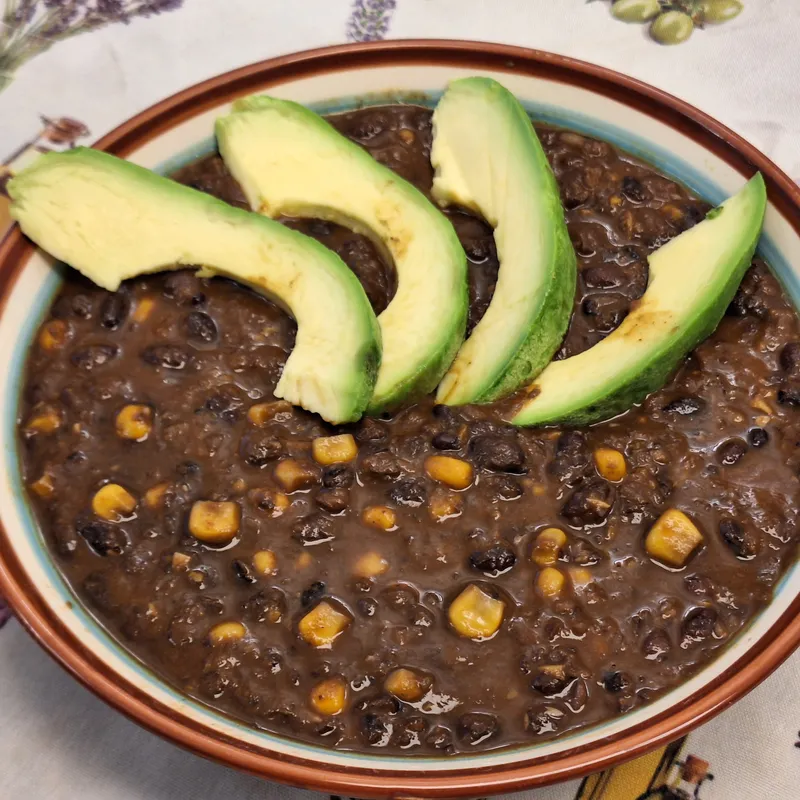
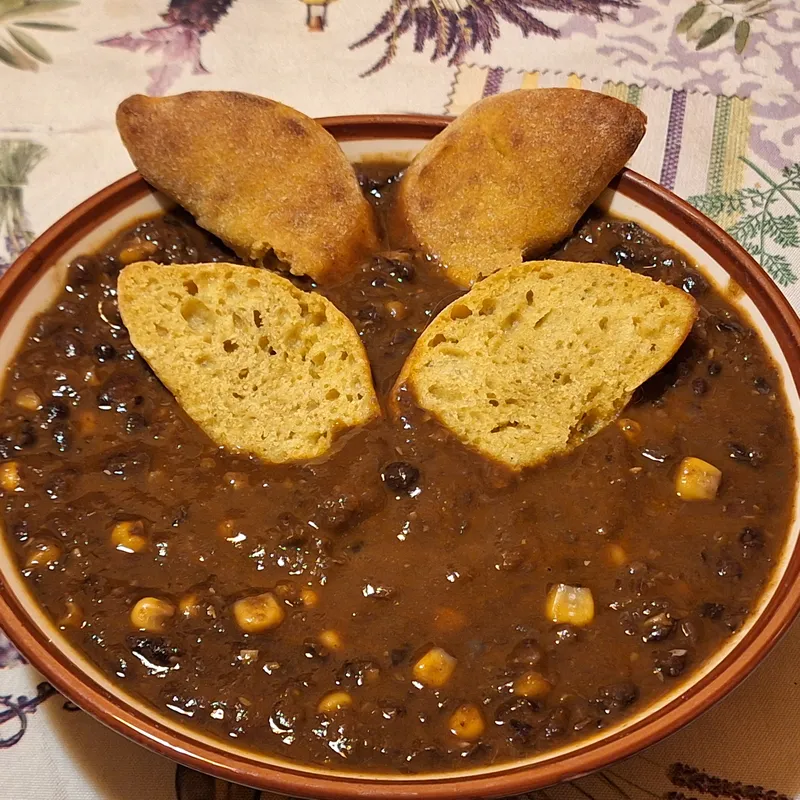
- Serve the soup hot in the bowl, with the raw avocado slices laid on top, a squeeze of lime to stop them browning, and the chopped parsley. The avocado is then broken up with the spoon right in the bowl, or you can add it diced. For a slightly more Mediterranean version, instead of the avocado you can serve it with rustic focaccine, the cloud focaccine or, for a tastier version, a few pieces of vegetable schiacciata. In the second photo below I used a cloud focaccina in the yellow turmeric version.
3. Storage
The avocado and lime should always be added at the moment, on the plate, not in the pot to be stored.
- Room temperature: not advised beyond 2 hours. A cooked legume soup is an ideal medium for bacteria: at room temperature the risk of growth rises quickly, so cool and store within a couple of hours.
- Refrigerator: 3-4 days in an airtight container, once cooled. Reheat in a pot, loosening with a little hot water if it has thickened. Add fresh avocado, lime and parsley to each serving.
- Freezer: it freezes well for up to 3 months (without avocado or parsley). Thaw in the fridge and reheat in a pot. The corn may be slightly softer after thawing, with no issue in taste.
4. Technical Notes
- Chilli, an important part of the recipe: while it stays optional, chilli is an element that defines this soup. Leaving it out gives a more delicate soup, where the sweet notes come through more (from the corn, the onion, the smoked paprika); adding it, the soup takes on its fuller, bolder Mexican character. Those who want to dose it precisely can use dried chilli flakes; in the original version chipotle in adobo also adds a smoky note and a little acidity, which in this recipe is offset to some extent by the smoked paprika and the lime.
- Smoked paprika: colour and aroma, not heat. Paprika (sweet or smoked) has very little capsaicin: it is not what brings heat. The smoked version is dried over wood and carries the volatile phenols of smoke, so it adds a smoky note and carotenoids (red colour), not pungent heat. Heat, if you want it, is handled separately with chilli.
- Why the tomato goes in halfway, not at the start. Acid (tomato, lime) and salt slow water absorption and firm up the pectins in the bean skins: on still-raw beans you risk firm centres and a much longer cook. Giving the beans about an hour in water alone brings them almost to doneness, then the tomato adds flavour without blocking the softening. It is the same reason salt and lime go right at the end.
- How much water and where it goes. Finished beans hold about 1-1.5 times their dry weight in water (about 65% moisture when cooked). For 300 g dry that is about 350-450 g of water trapped in the beans; the rest stays liquid and becomes the soup's broth. 1.2 L gives a dense soup but with broth: drop to 1 L for a drier one, go to 1.4 L for a brothier one. No water is wasted, it becomes part of the dish.
- Partial blend for creaminess. Blending part of the cooked beans and returning it to the pot uses their starch to thicken the soup. The more you blend, the more velvety it gets; here the blend is light (about 1/4) to keep it rustic and chewy.
- Raw avocado and why it browns. Cut avocado darkens through polyphenol oxidase (PPO), an enzyme that, with oxygen, turns phenolic compounds into brown pigments. Lime juice lowers the pH and slows the enzyme. That is why the avocado goes in last, raw on the plate: the soup's heat would ruin its texture and flavour, and air contact would brown it if cut too far ahead.
5. Sources
- Serious Eats: blending part of the beans for a creamy dairy-free soup, salt and acid at the end
- America's Test Kitchen: acid keeps legume cell walls intact and slows softening
- Serious Eats: acid slows avocado browning by acting on polyphenol oxidase
- USDA FoodData Central: negligible capsaicin content in paprika compared with hot chillies
- Forks Over Knives: 100% plant-based black bean soup method